The Oridinary and the Extraordinary Christian?

Martin Luther's room in Wartburg Castle

R.Scott Clark concerning Reformed piety, and it’s denial of two distinct classes of the Christian (ordinary & extraordinary/spiritual).

“When, in 1517, Luther complained about the abuse of indulgences, he began a movement back to Scripture and toward a biblical understanding of piety in which Christ’s grace received in public worship overflows into private prayer and family devotions. He repudiated the error that there are two classes of Christians, and he repudiated their spiritual exercises. The Reformed followed him back to Scripture. But history tells us that there is a monk within each of us, continually looking for new ways to corrupt Christian piety, seeking to draw our eyes away from Christ, His grace, and His piety.”

~ R.Scott Clark

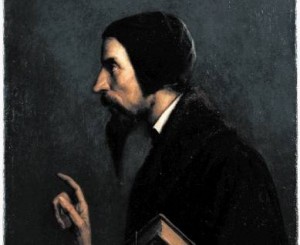
John Calvin on Jeremiah 32:40…

6F08DAC0-A940-4E97-9904-6DA5D6BE16A2

I will make with them an everlasting covenant, that I will not turn away from doing good to them. And I will put the fear of me in their hearts, that they may not turn from me.

~ Jeremiah 32:40


“A question may, however, be here raised: we see that the faithful often stumble, not ten times during life, but every day: how then is this, that where God’s Spirit works, his efficacy is such that men never turn aside from the right way? Were any to answer, that the faithful indeed stumble, but do not wholly fail, and that God here refers to that defection which shakes off every fear of God, it would not be a full solution. For we see that even the elect themselves are sometimes like apostates, for the fear of God and piety are, as it were, choked in them. Piety is not indeed extinguished, but not even a spark of the Spirit appears in them. But we must notice, that inflexible perseverance is given to the faithful, so that when they fall, they soon repent.”

~ John Calvin

A Message Concerning Ethnic Diversity in the Church…

EC2E84D4-4947-418A-81B1-03586EF04B65

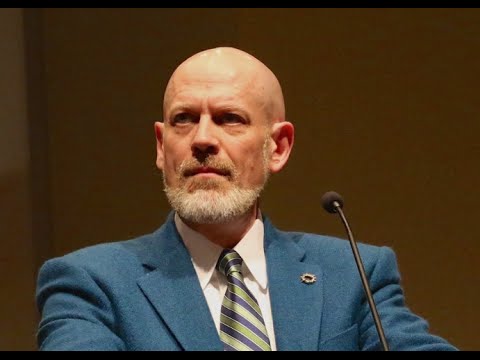
Below is a wonderful message from Dr. James White. Dr. White offers some encouragement for the local church, and a challenge to all believers concerning the recent sin problem involving the skin color of believers.

“We have long prayers at my church. Well, at least the pastoral prayer on Sunday mornings. I normally lead that prayer. We start off with “a few moments of silent prayer.” Ever noticed that ‘a few moments’ is normally like about twelve seconds? We seem to be very, very uncomfortable with silence, and so it drags by slowly. Now, I have never stood there for a ‘few moments’ literally in silence. I can’t imagine I’ve ever gone over ninety seconds. But for most folks, it is an eternity.

Including the silence at the start, I would say the average pastoral prayer on Sunday mornings runs between ten and fourteen minutes in length. Yeah, that’s pretty long. But, it is the major meeting of the church, the most members are present, and there is a great deal to pray about!

Last Sunday before the prayer I looked out over the congregation. It was an average Sunday morning, and given the firestorm that I’ve been walking through, I did what I did not ever want to do: I looked at ethnicities. Now, for some, I just don’t know. European backgrounds can be hard to determine or detect. I do not know visitors, of course, and even some members I do not know the ethnicity of their ancestors. That’s one of the reasons why the ‘white’ label is so worthless (and hence so used)—it means next to nothing as it cannot possibly cover the full extent of the range of ethnicities that do not have particularly distinctive physical features. So anyway I scanned the brothers and sisters gathered in our little church. Two black families, husband and wife and kids. One black young man (single). One Chinese family, only the husband present as the wife is recovering from a stroke. Our long-time Filipino family was present. We have a number of Hispanic families. One Vietnamese brother was present. I am uncertain of the visiting family (they jet so fast after the service I never get to talk to them!), but they are generally ‘Asian,’ though I am not sure which specific nationality. We have one fine Indian lady as well. And a brother with a fair amount of Native American blood. The rest are a mixture of Eastern European, Italian, and then plain ol’ ‘mixed’ folks, along with some fairly Scottish folks, like me.

Now, how did we get such a diverse representation in a group of about eighty folks? Did we buy into one of those survey companies that ‘help’ churches determine how to be properly ethnically “diverse”? Anyone who knows my fellow elders is chuckling heartily at the very idea. No, we did not pursue some kind of ‘ethnic diversity program.’ So how do we have such diversity without specifically making it a goal, a target?

I was just reading a recent article by Darrell Harrison about ethnicity in the church and I was struck again by a simple yet profound reality: all this hand-wringing and survey-taking and history-raising stuff is missing a really basic point. We have diversity in our congregation simply because God draws men and women from many different ethnicities, placing in their hearts a love of God’s Word and a desire to hear it consistently and deeply opened, explained, applied, and proclaimed. In other words, having a focus upon consistent exegetical proclamation of Scripture, based upon an unflinching confession of it being God-breathed, the very speech of the Almighty, draws those who have that very thing as their highest priority. We do not draw the folks looking for children’s programs, fancy facilities, shuttle services to the door, music programs and fancy lighting. We have none of that. We draw only those who are willing to forego what might otherwise be just fine additions for what, in their convictions, cannot be missing: the consistent teaching of Scripture.

In other words, our diversity grows out of unity: a unified dedication to the proclamation of the whole council of God in each gathering. You are not going to grow too many mega-churches with that as your commitment. But we’ve been at it for many decades now, and that is why we are what we are.

It is a shame that today we hear so many voices that once would have given a hearty ‘Amen!’ at such an observation who today hesitate and then say, ‘But…that is not enough. We are now woke to the rest of the story.’ Well, you may be, but it wasn’t the Scripture that made you ‘woke.’ Admit it: it was the embracing of a sociological theory that has led you to your current position. It was the insertion of concepts of intersectionality and oppression and privilege and systemic barriers and economic disadvantage and equality of outcomes and all that language. It was not the consistent focus upon the centrality of the proclamation of the whole council of God. I would assert that our diversity is a Spirit-born diversity because it arises from the Spirit’s blessing of His truth. And that is the only diversity we should be looking for.”

~ James White

A Helpful Response to Beth Moore…

76D1690A-1BCB-4EEB-9A91-5AE02BCCD433


The following is a Twitter response to Beth Moore’s recent comments concerning Mother’s Day. It needs to be said that I disagree with Beth Moore on many things. However, I’m sharing this response because it’s graceful, helpful, and attempts to offer encouragement to an approach to worship that is not a Biblical one. Tom here gets to the thing behind the thing.


Much has been said about Beth Moore’s advice for grieving women to stay away from church on Mother’s Day. While I disagree with Beth, I have personal experience with the pain (my wife and I experienced 15 years of infertility) and would like to offer some pastoral thoughts.

While it would be easy to simply say, “You need to go to church,” maybe we should do some self-examination of our churches. Perhaps this has as much to say about us as it does them, and it might reveal a deeper problem with our churches today. Let me offer six thoughts.

1.Too many churches have made worship about the “customer” rather than about God. So we shouldn’t be surprised when we design our worship services to cater to consumers that our people make selfish decisions about attending. We’ve taught them to be self-focused.

2.Too many churches design their services to focus on the individual rather than the corporate nature of worship. Much modern worship creates spectators of “worship” rather than participants in worship. So, does it really matter where I am if it’s all about my time with God?

3.Too many churches know how to celebrate, but don’t know how to lament. We’re good at rejoicing with those who rejoice, but fail at weeping with those who weep. If every song in every service is a celebration fest, there’s little room for the broken-hearted.

4.Perhaps this is because we let other things guide worship rather than God’s Word. Imagine if our worship services were designed to feed people God’s Word; singing guided by the Word rather than the radio station; worship that takes attention off self & places it fully upon God

5.What if our churches simply did what Scripture calls us to do in our worship services: Read the Word (1 Tim 4:13), Preach the Word (2 Tim 4:2), Pray the Word (1 Tim 2:1), Sing the Word (Eph 5:19), Display the Word – Baptism and Lord’s Supper (Lk 22:19;Rom 6:3).

6. Maybe this reveals how starved people are for what they REALLY need. We need God’s Word to govern and guide worship. There’s likely more, but I believe this reveals our worship gatherings are not giving people what they need to sustain them in both the joys and sorrows of life

~ Tom Buck


From Paedobaptist to Credobaptist…

F13F25F6-1CFF-46F9-AF57-14DFE76508B2

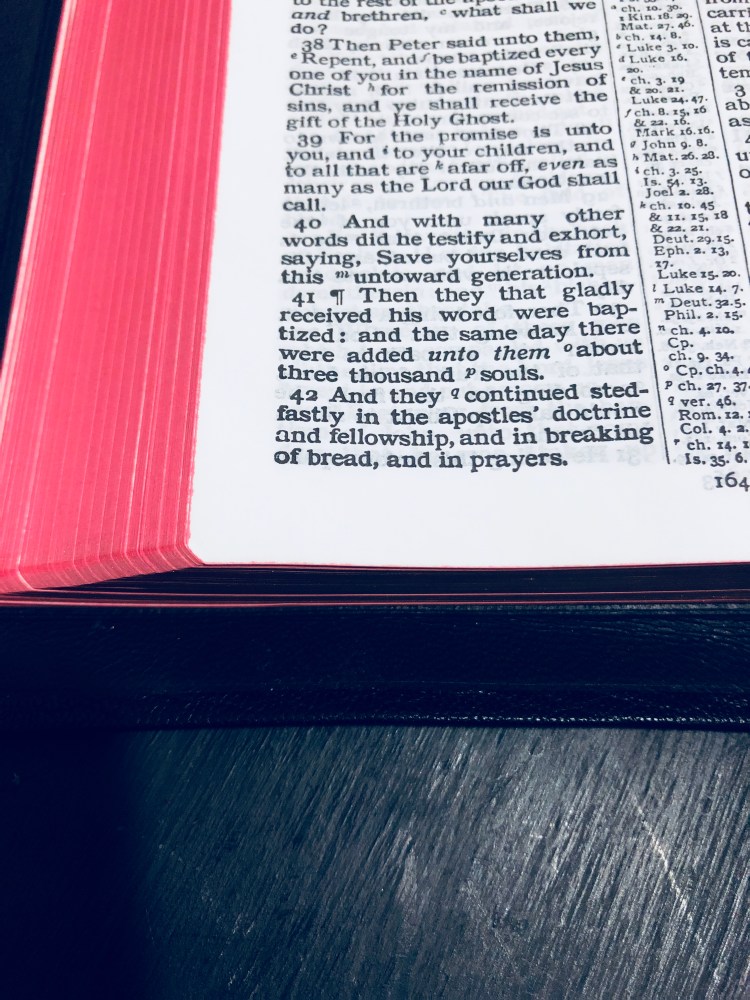
A few days ago a brother on Twitter asked a question concerning a Tweet I had recently posted. The Tweet was of a Reformed Baptist pastor exegeting Acts 2:38-39, found here. These verses are one of several places in the New Testament where my paedobaptist brethren claim support the infant baptism tradition.

791F71DD-5213-4245-B28D-A36758104F74

I responded by giving him exactly what he wanted. This same Reformed Baptist pastor just so happened to record a 3-part series describing his conversion form paedobaptism to credobaptism last year.

Mark Hogan is the pastor of Pilgrim Reformed Baptist Church in Valley City, North Dakota. A graduate of Westminster Seminary, California., pastor Mark entered seminary a lifelong Paedobaptist, only to graduate as a Reformed Baptist. Lucky for us pastor Mark shares this story with pastor Joe Anady of Emmaus Church in Hemet, California.

Enjoy!

Pastor Mark Hogan Interview: Episode 1

Pastor Mark Hogan Interview: Episode 2

Pastor Mark Hogan Interview: Episode 3

Reformed Baptist Covenant Theology…


23BB080D-F30E-4062-A559-1694AD7FC2FF


If interested in learning Covenant Theology from a Reformed Baptist perspective this 5-part series is a great listen!

Brandon Adams joins the Reformed NorthWest Podcast to discuss 1689 Federalism. Topics covered are the Covenant of Works, Getting the Garden Right, the Noahic, Abrahamic, Mosaic, and Davidic Covenants, as well as the Covenant of Grace, which is the New Covenant.


https://reformednw.com/1689-federalism-pt1/

https://reformednw.com/1689-federalism-pt2/

https://reformednw.com/1689-federalism-pt3/

https://reformednw.com/1689-federalism-pt4/

https://reformednw.com/1689-federalism-pt5/


So, What’s New?

IMG_2853


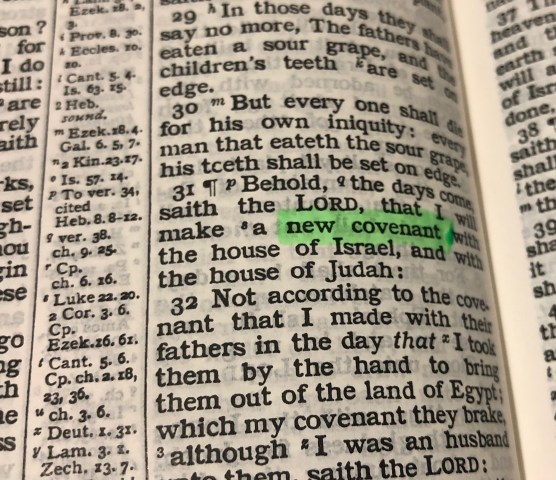
As I began my study of Covenant Theology many things stuck out to me as I read through the different Reformed Confessions. I will write about one of these things here today, which is the claim that the New Covenant is not really new at all. The idea is that the New Covenant prophesied in Jeremiah, and consummated in the New Testament by Christ, was really just an expansion or renewal of the Abrahamic Covenant. Which means that the New Covenant while in a sense being new, was not new in the way we use the term today.

Concerning the Covenant of Grace, the Westminster Confession of Faith 7.5 says…

“This covenant was differently administered in the time of the law, and in the time of the Gospel: under the law it was administered by promises, prophecies, sacrifices, circumcision, the paschal lamb, and other types and ordinances delivered to the people of the Jews, all foresignifying Christ to come; which were, for that time, sufficient and efficacious, through the operation of the Spirit, to instruct and build up the elect in faith in the promised Messiah, by whom they had full remission of sins and eternal salvation; and is called the Old Testament.”

and in 7.6…

“Under the Gospel, when Christ, the substance, was exhibited, the ordinances in which this covenant is dispensed are the preaching of the Word, and the administration of the sacraments of Baptism and the Lord’s Supper: which, though fewer in number, and administered with more simplicity, and less outward glory, yet, in them, it is held forth in more fullness, evidence, and spiritual efficacy, to all nations, both Jews, and Gentiles; and is called the New Testament. There are not therefore two covenants of grace, differing in substance, but one and the same, under various dispensations.”

In making every Old Testament covenant the actual Covenant of Grace, those that subscribe to Westminster Confession must say that the New Covenant is not really new at all. But this raises many concerns. One is that the scriptures teach that the New Covenant is in fact, new.

Jeremiah 31:31 says…

“Behold, the days are coming, declares the LORD, when I will make a new covenant with the house of Israel and the house of Judah…”

Hebrews 8:6 says…

“But as it is, Christ has obtained a ministry that is as much more excellent than the old as the covenant he mediates is better, since it is enacted on better promises.”

Hebrews 8:7 says that the Old Covenant was faulty, therefore…

“For if that first covenant had been faultless, there would have been no occasion to look for a second.”

For those of you that are familiar with me, you would be well aware that I am not interested in bringing anything new to the table…no pun intended. 😉 If all I am ever known for is being the guy that points you to the guy, I would be completely fine with that. Whether that is pointing people to Christ as I share the wonderful Gospel, or as in this case, pointing you to scholars who have already written about the same inconsistency I have mentioned here (and then some), and have already done so in a manner far better than I ever could.

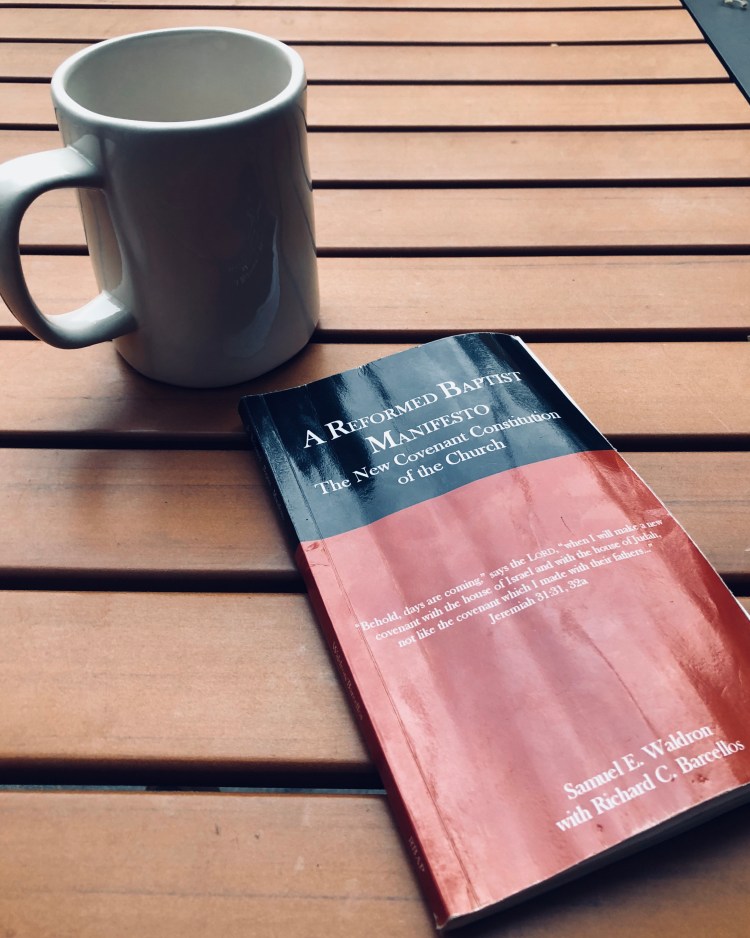
In the book A Reformed Baptist Manifesto – The New Covenant Constitution of the Church, Richard Barcellos, and Sam Waldron speak concerning this inconsistency in great detail. In chapter 4 of the book, they explain the paedobaptist system which produces this result and then contrast that with what the scriptures teach. Three main points are used to do this…

The Emphasized Dissimilarity of the New Covenant

The Precise Superiority of the New Covenant

The Ultimate Fulfillment of the New Covenant

In their conclusion, Barcellos, and Waldron take into account the broader implications of what Jeremiah 31 teaches about Church membership or membership in the New Covenant. Their concluding 5 paragraphs are as follows…

We see the utter folly of placing any confidence in our having been baptized as infants into the church of the New Covenant.

We see the absolute and binding duty of being baptized as a believer.

We see the crucial importance of maintaining biblical standards of Church membership.

We see the unchanging qualifications for biblical Church membership. 

We see, finally, the glorious blessing of membership in a true church. 

This book has been a helpful resource for my study of the covenants. Not only is the book a compact size, enabling me to place it in my back pocket in case the wife wants to make her daily stop at the Dollar Tree, but its contrast of the new constitution of the church and paedobaptism is just one of four chapters. The authors also critique Dispensationalism, Antimomiamism, and Arminianism. Whether you’re on a journey trying to learn about covenant theology, Arminianism, dispensationalism, or the like, or perhaps would love to challenge your own tradition I encourage you to read this book.

A Reformed Baptist Manifesto can be purchased here:

https://www.amazon.com/Reformed-Baptist-Manifesto-Samuel-Waldron/dp/0976003902/ref=sr_1_1?ie=UTF8&qid=1525544267&sr=8-1&keywords=a+reformed+baptist+manifesto

The book is currently out of stock at RBAP, but the link is below. Word on the street is if you apply a little pressure to the publisher he will get some more copies on the RBAP shelves. 😉

http://www.rbap.net/our-books/a-reformed-baptist-manifesto-the-new-covenant-constitution-of-the-church-by-sam-waldron-richard-bacellos/

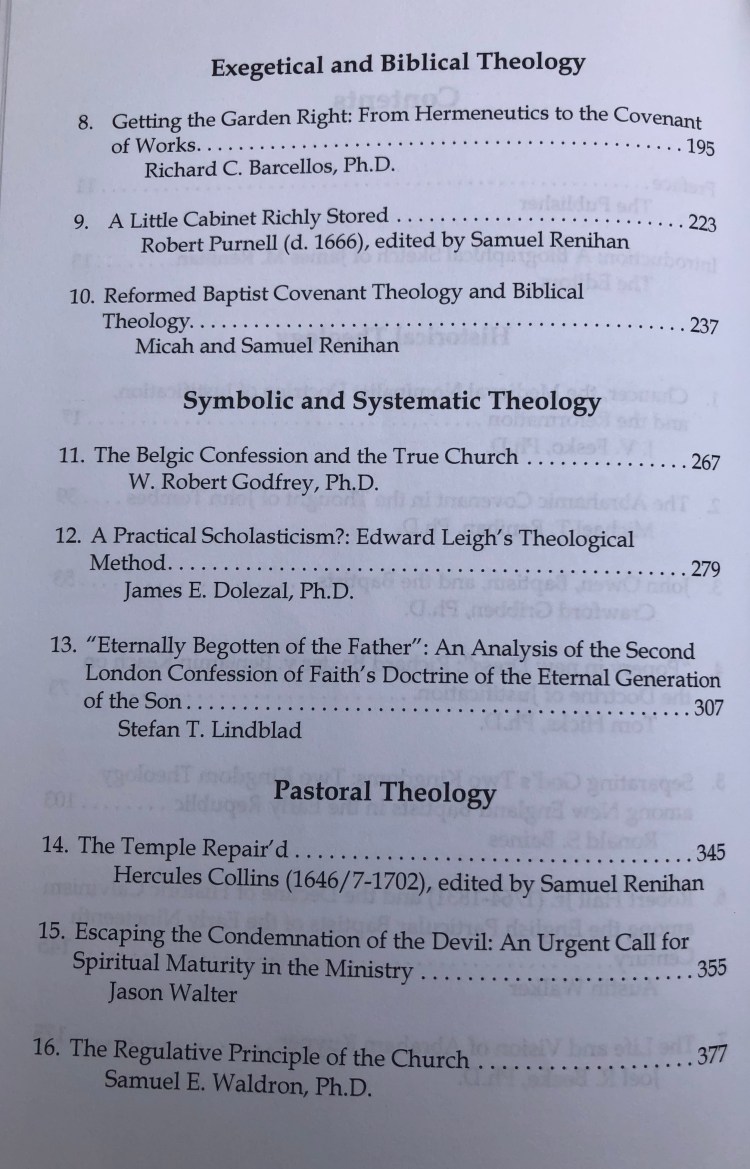
“John Owen, Baptism, and the Baptists”

FFEB4991-247D-4CF0-A273-071841863C4F


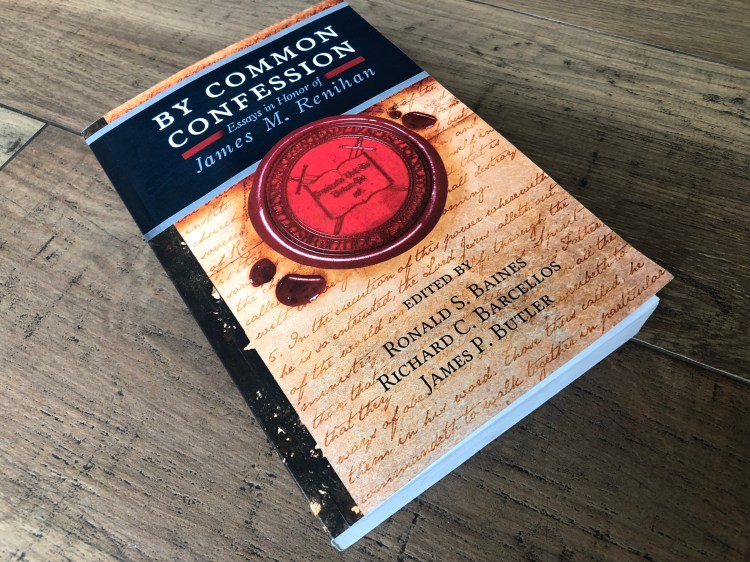
Dr. Crawford Gribben is a professor of Early Modern Baptist History at Queen’s University Belfast, as well as a visiting professor of church history at the new Institute of Reformed Baptist Studies (IRBS) Seminary opening this Fall in Mansfield, Texas.

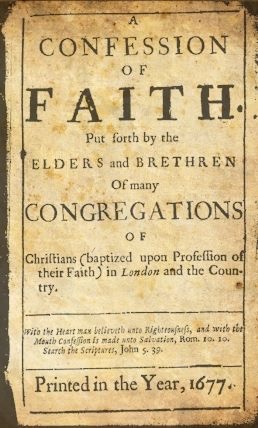
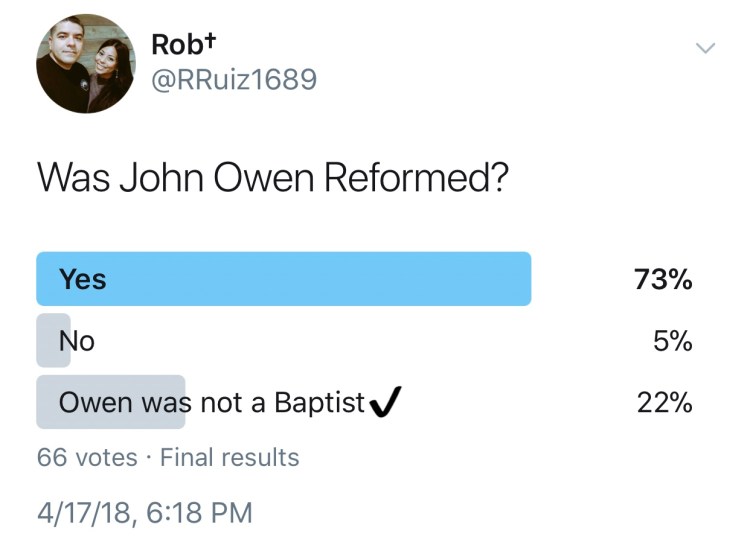
Dr. Gribben has written an excellent article concerning John Owen and what seems to be a progressive stance concerning his defense of infant baptism, as well as his relationship with the Baptists during his lifetime. I strongly recommend reading this work, as it’s just one of seventeen essays written by scholars in honor of IRBS President and professor of  historical theology Dr. James Renihan. It is obvious to all that John Owen was a practicing paedobaptist during his lifetime. This means that John Owen was in fact, not a Baptist. ✔️ However, the clarity with which he defended infant baptism, his disagreement with those who practiced believers baptism only, and his relationship in his later years with the Baptists are discussed in this essay.

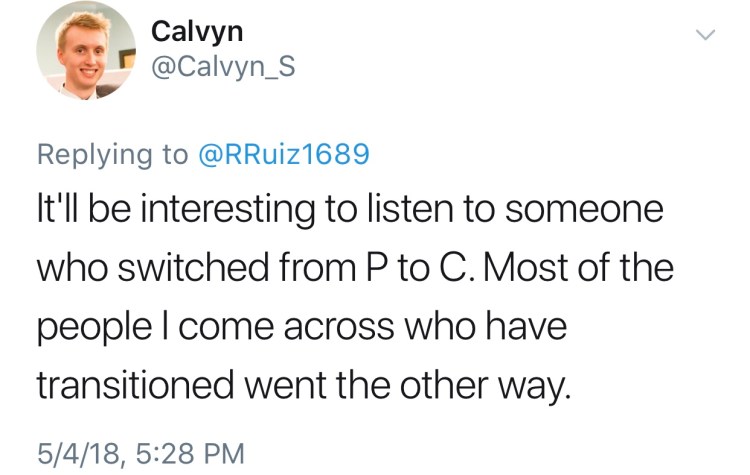
I find it interesting that in a recent poll on Twitter, 73% of the 66 people that voted felt that John Owen had a seat at the Reformed table. While I agree with the majority here, after reading this essay it is my belief that the results of this poll might cause one to raise an eyebrow or two.

F6A4CFB5-DA04-49AB-9588-DC4B13FBBCF8


The book can be purchased here:

http://www.rbap.net/our-books/by-common-confession-essays-in-honor-of-james-m-renihan/

CFF672BD-8A6A-4544-AB60-559DDA2B9C21.jpeg

7C05976E-C786-462C-B040-D89197FF4D5E.jpeg

A5CCF11A-1A9D-4B19-A153-129962ABC72C.jpeg

Spurgeon on The Object of Our Faith…

97525676-DA77-452E-BF8A-6C9651C233D8


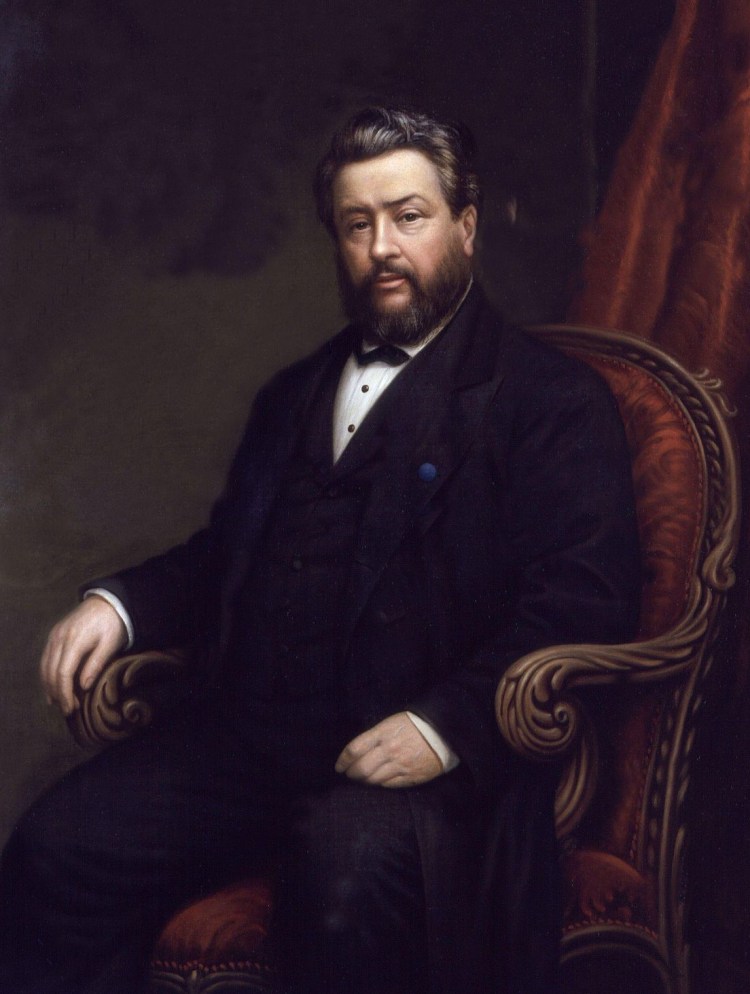
“I AM told in the Word of God to believe—What am I to believe? I am bidden to look—to what am I to look? What is to be the object of my hope, belief, and confidence?—The reply is simple. The object of Faith to a sinner is Christ Jesus. How many make a mistake about this and think that they are to believe on God the Father! Now, belief in God is an after-result of faith in Jesus. We come to believe in the eternal love of the Father as the result of trusting the precious blood of the Son.
Many men say, ‘I would believe in Christ if I knew that I were elect.’ This is coming to the Father, and no man can come to the Father except by Christ. It is the Father’s work to elect; you cannot come directly to him, therefore you cannot know your election until first you have believed on Christ the Redeemer, and then through redemption you can approach to the Father, and know your election.”

~ Charles Spurgeon