Covenant Theology Explained…

5B87130E-AE01-417A-9F2E-4FCE8B55CC96

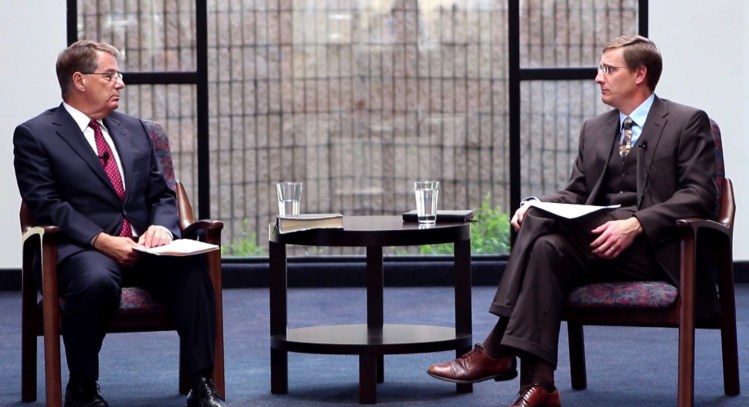
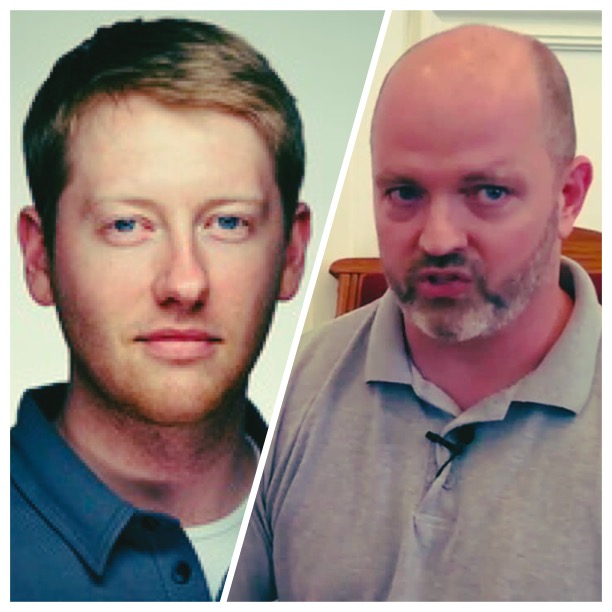
Brandon Adams and pastor Patrick Hines got together to talk Reformed Covenant Theology on a recent episode of Semper Reformanda Radio.

Many thing’s were discussed during this episode with each side getting an initial twenty-minutes to explain their personal view of Gods covenants with man. When the pair finally got into a personal dialogue regarding these important topics, the word “presupposition” began to be thrown around quite a bit. This is a word I have been very consistent mentioning both here on my blog, as well as on the Twitter the last couple of years. More often than not, it is when I’m engaging my paedobaptist brethren where the word starts to be thrown around at a much higher rate. This is also a word I have found many people do not appreciate much. But to be clear, when I mention it in a conversation I am not saying that my paedobaptist brethren have presuppositions and I do not. Rather, I’m saying that we have them as well but that ours are different. I feel Brandon handles the word presupposition in a similar fashion than I during this episode. This really is not something to get baffled about or take personally. These are the things we need to get to in order to have a helpful discussion concerning why we believe the things we do. For example, the word “presupposition” was mentioned at the conclusion of a recent Regular Reformed Guys podcast with Dr. Samuel Renihan found here, almost daily on my Twitter feed found here, as well as by both Brandon and pastor Hines during this episode. So clearly I’m not the only one mentioning the word when trying to understand the other side.

Why do I mention this? Because presuppositions matter and in my opinion were the source of many frustrations displayed in this podcast by pastor Hines. It seemed hard for him to understand the many things he took for granted and as biblical truth, were the very things Brandon wanted to discuss in detail. For example, pastor Hines assumes many things are Biblical truth and imports them into his conversations with Brandon. A few of those assumptions (presuppositions) mentioned in this podcast would be, that there is multiple administrations of the covenant of grace, all of Israel being the church, all of Israel being the church and a type of the church at the same time, ἐκκλησια having to mean that all of Israel was the actual church instead of being described as a nation or assembly, baptism has replaced circumcision, etc. Towards the conclusion Brandon points this out to pastor Hines, explaining how he seems baffled because he can’t see how  Brandon can reach the conclusions that he does. He can’t see the Reformed Baptist postion (it’s okay to disagree with it) because he is applying his own system of thought into every question he asks of Brandon, as well as every critique.

I would recommend looking past the emotion displayed in the audio as pastor Hines takes a rather aggressive approach, with Brandon presenting his perspective in a more calm manner. Listening to the words in this dialogue instead of the tone throughout from either side would be beneficial. I would also recommend focusing in specifically during the last twenty minutes. It is in my opinion that this is where Brandon brings to light just a few of the many inconsistencies we see in our paedobaptist brethren’s covenant theology. Things like the OPC report on Republication, pastor Hines not having a firm grasp on republication, pastor Hines describing over and again a position that is not aligned with the Westminster Confession of Faith (Mosaic Covenant different in Substance from Abrahamic Covenant and not the Covenant of Grace), etc. I think Brandon handled these inconsistencies very well, choosing to ask questions in a way that would allow pastor Hines to see for himself that all of the pieces might not fit together as tightly as he originally had thought they did. I hope that it at least gave him something to think about.

I look forward to Brandon and pastor Hines getting together for a second conversation soon. This was very helpful indeed.

Check out the entirety of this informal debate at the link below.

https://thorncrownministries.com/srr/2018/8/22/srr-90-a-reformed-baptist-and-presbyterian-debate

Update! Brandon Adams has updated his blog concerning this dialogue found here.

Update #2! Pastor Hines has issued an apology concerning his behavior during this debate, found here. This is a positive step forward, indeed. 
Particular Baptist Covenant Theology…

BD2DC6B2-B760-42A9-81D3-6C39BA55DF49

In the early decades of the seventeenth century the English church was undergoing a drastic metamorphosis. The spread of the Reformation from the continent to England, the succession of English rulers, and the increasing availability of literature produced an ever-shifting political, sociological, and theological environment. Within this context, a “Puritan” movement sought to reform the Church of England and bring its credenda and agenda into line with the Scriptures, abandoning what the Puritans considered to be the traditions of men.

In this context of dissent and separation, the Particular Baptists emerged not just from the Church of England, but more specifically from semi-separatist Independents. Thus, when the Particular Baptists applied their Puritan zeal to infant baptism they were reforming themselves first and foremost, and then calling the larger English church to remove what they saw as unreformed tradition.

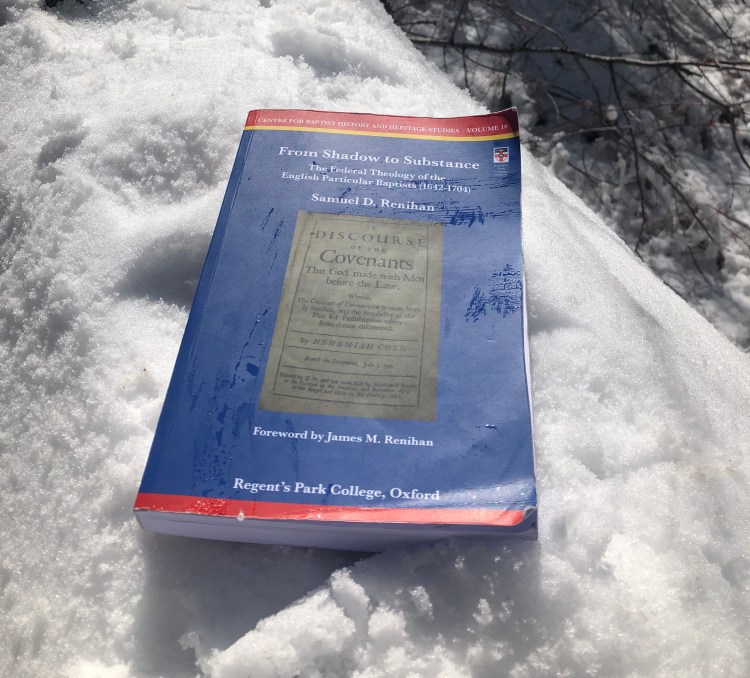
This context is extremely important. The literature of the Particular Baptists in the seventeenth century shows very little in the realm of systematic theology. The Particular Baptists did not attempt to develop a new system of doctrine. They agreed with the theology advocated by the Reformers in general and the Separatists in particular. But they considered these very principles to lead naturally to their Baptist conclusions. Particular Baptist writings on covenant theology reflect this context. They did not write complete expositions or extensive treatises of the covenants. There was no need. They wrote polemically against key features within paedobaptist theology, particularly positive law and the differences between the old and the new covenants.

https://www.amazon.com/Shadow-Substance-Theology-Particular-1642-1704/dp/1907600310

Very Interesting Indeed…

20B70101-870E-48A5-B075-BA400EBC6DD2

This was a very interesting dialogue between former Westminster Seminary California President Robert Godfrey, and current WSC professor David VanDrunen.

Many interesting points are brought to the surface during this short dialogue concerning Dr. VanDrunens’ “Two Kingdom” theological system. One of these things that were mentioned by Dr. Godfrey was the broadness of the terms Reformed, Protestant, and even Two-Kingdoms itself. There are many people today (church history professors included), who attempt almost daily it would seem to make the terms mentioned above so crystal clear. They skip past the broadness of the movement or terms mentioned, and instead attempt to paint a black and white distinction between these things, when history it seems would paint us a different picture. This for example, leads to inconsistent claims of who can use the term “Reformed,” and who can claim to be a “true church.”

Another inconsistency mentioned by Dr. Godfrey was the role of a child and the family in Dr. VanDrunens’ system of thought. While I disagree with both of these men concerning the infant baptism tradition, I believe Dr. Godfrey hits the nail on the head when he alludes to the fact that in Dr. VanDrunens’ system, the child being considered a member of the church, or even “holy” as Dr. Godfrey states, makes no sense at all in the Two Kingdom approach. While Dr. VanDrunen disagrees with this claim, I think it’s interesting to listen closely as he attempts to answer this challenge by Dr. Godfrey. It is my opinion that his answer not only unveils the true ambiguity of his system, but also brings to light a blurred reasoning behind the infant baptism tradition itself.

I encourage you to watch this dialogue as both men handle the challenges to their traditions with clarity, grace, and a mutual respect for one another. I think we can learn much from conversations such as these, as these two men critique (often very aggresively) the others position repeatedly without anyone claiming to be bullied, harassed, or mistreated in any way. While we all may not be able to sit together in air conditioned rooms and behind HD video equipment to discuss our disagreements with one another on the Twitter, perhaps we can learn from this discussion that just because someone is challenging your tradition, it doesn’t then mean that they’re attacking you personally.

Here is a link to the entire dialogue.

Ryle on Faith and Assurance…

E5B9BCA5-1365-43D8-BF79-A07851FA94E0


I have fought a good fight, I have finished my course, I have kept the faith; henceforth there is laid up for me a crown of righteousness, which the Lord, the righteous judge, shall give me at that day; and not to me only, but unto all them also that love His appearing.

2 Timothy 4:7-8

“An assured hope, such as Paul expresses in 2 Timothy 4:6-8, is a true and Scriptural thing. I would lay it down fully and broadly, that a true Christian, a converted man, may reach that comfortable degree of faith in Christ, that in general he shall feel entirely confident as to the pardon and safety of his soul, — shall seldom be troubled with doubts, — seldom be distracted with hesitation, — seldom be distressed by anxious questionings, — and, in short, though vexed by many an inward conflict with sin, shall look forward to death without trembling, and to judgment without dismay.

The vast majority of the worldly oppose the doctrine of assurance. That they cannot receive it is certainly no marvel. But there are also some true believers who reject assurance, or shrink from it as a doctrine fraught with danger. They think it borders on presumption. They seem to think it a proper humility never to be confident, and to live in a certain degree of doubt. This is to be regretted, and does much harm.”

~ J.C. Ryle

Jesus Concerning Regeneration…

3DD238C0-0F94-43AE-9675-E0F792E27D75


This man came to Jesus by night and said to him, “Rabbi, we know that you are a teacher come from God, for no one can do these signs that you do unless God is with him.” Jesus answered him, “Truly, truly, I say to you, unless one is born again he cannot see the kingdom of God.” Nicodemus said to him, “How can a man be born when he is old? Can he enter a second time into his mother’s womb and be born?” Jesus answered, “Truly, truly, I say to you, unless one is born of water and the Spirit, he cannot enter the kingdom of God. That which is born of the flesh is flesh, and that which is born of the Spirit is spirit. Do not marvel that I said to you, ‘You must be born again.’ The wind blows where it wishes, and you hear its sound, but you do not know where it comes from or where it goes. So it is with everyone who is born of the Spirit.”

John 3:2–8

It is the Spirit who gives life; the flesh is no help at all. The words that I have spoken to you are spirit and life. But there are some of you who do not believe.” (For Jesus knew from the beginning who those were who did not believe, and who it was who would betray him.) And he said, “This is why I told you that no one can come to me unless it is granted him by the Father.” After this many of his disciples turned back and no longer walked with him.

John 6:63–66 


“Don’t Want to Hear It!”

5C705433-2006-4195-A4E2-765FF014B53A

As a Christian studying the scriptures, there was a time I started to struggle with things I had been taught in my denomination for much of my life. I was now a pastor, a college student, and counselor, teaching people of all ages the truth of Gods word on a consistent basis. But this internal struggle was not feeling uncomfortable with what the Bible was saying, rather, it was a struggle trying to find the system I had been taught all of my life consistently in the scriptures themselves.

Every time these feelings came up I would always respond in the same manner. I would usually tell myself this…

“There is no way that men like Greg Laurie, Raul Ries, Chuck Smith, and Jack Hibbs could be this wrong about the Bible.”

As silly as that sounds, this was in fact the way I would respond to the struggles I was having while reading God’s word. It’s almost as if I felt that if I was wrong about these important truths, at least I wasn’t alone in my thinking. In other words, I will just trust in what these men are teaching me and ride or die with that. To be clear, I’m not saying that I was worshipping these men. But what was happening was that when I was being challenged with Gods word, either in my personal study or my other brothers in the faith, I was not searching the scriptures to see that it is so.

If I would have continued on behaving in this manner I would never have listened to someone clearly express to me the wonderful truths of scripture. I would have avoided reading the works of dead men such as John Calvin, Martin Luther, Charles Spurgeon, J.C. Ryle, B.B. Warfield, Louis Berkhof, and the recently diceased R.C. Sproul. I wouldn’t have read about them because my denomination encouraged me not to. Some contemporary men of the faith like James White, John MacArthur, R. Scott Clark, Michael Horton, and James Renihan would have been strangers to me as well. I have learned that often we can take an ear-plugs approach to things that challenge our traditions. We can even do this when it comes to brothers/sisters in the faith that challenge our interpretation of scriptures. Whether it be on social media, podcasts, recent scholarly work, or even behind the pulpit, we face these challenges everyday. I’m not trying to make the argument that we should listen to every single challenge that is coming our way. As a father of four young children, and a husband to a wife of nineteen-years, I have to choose the way I spend my time wisely. But to completely ignore something that challenges my faith, or better put, to simply defend my own tradition by saying that men who think just like me in no way could have been wrong, is a very dangerous and unhelpful position to take. It’s also a very sad thing to see Christians continue to misrepresent other Christians Biblical traditions on daily basis, yet offer no response, or even an apology when confronted about it. This reveals an unhealthy pride that one has for their own position, unwilling to deal with the brethren respectfully because they don’t think just like us.

“These men who think like me can not be wrong. Surely they couldn’t have missed this.”

As a Reformed/Particular Baptist, I have found great joy in reading recent scholarly work done concerning my own Baptist tradition. For example, reading works such as Samuel Renihan’s “From Shadow to Substance,” or Pascal Denaults “Distinctiveness of Baptist Covenant Theology” to name a couple have been extremely helpful. Not only because it’s sound doctrine, but finding out that the struggles I have now concerning a certain type of Covenant Theology are not new at all. In fact, there were men like me in the 17th Century that struggled in the same manner. This has been very encouraging. But on the flip side, when I receive direct messages from people asking me what is a good systematic theology that a Reformed Baptist like myself would recommend to someone who thinks just like me, I have no problem referring people to many of the names I have mentioned above (Calvin’s Institutes, Berkhof, Horton, etc.). I can do this not only because I share so much with these men, but also because I’m confident in my own tradition and am not afraid to be challenged by others who think differently than I do.

“Iron sharpens iron, and one man sharpens another.”

~ Proverbs 27:17

Being challenged by other men/women of the faith can be a good thing if done with gentleness and respect. We shouldn’t turn every disagreement with our own tradition as some kind of barfight, bullying, or divisiveness. Rather, we should be encouraged by one another despite our differences. We should not be prideful by thinking there’s no way I or the men that think just like me can be wrong here. This sort of thinking can be the result of a prideful heart. It was for me at least. I would also argue that it can be a clear sign that you’re not very confident in your own tradition. The reason for this being that you’re fearful that it might just be that; a tradition.

R.Scott Clark, Augustine, and the Infant Baptism Tradition…

FEFF8674-498A-4A13-91E2-344826F3D97C

This is wonderful article written by a friend of mine (Chris Whisonant) concerning inconsistencies in the way many of my paedobaptist friends defend the infant baptism tradition. 

https://cwhisonant.wordpress.com/2018/07/19/re-augustine-infant-baptism-is-the-apostolic-and-universal-practice-of-the-church/

“A Stranger They Will Not Follow…”

Truly, truly, I say to you, he who does not enter the sheepfold by the door but climbs in by another way, that man is a thief and a robber. But he who enters by the door is the shepherd of the sheep. To him the gatekeeper opens. The sheep hear his voice, and he calls his own sheep by name and leads them out. When he has brought out all his own, he goes before them, and the sheep follow him, for they know his voice. A stranger they will not follow, but they will flee from him, for they do not know the voice of strangers.” This figure of speech Jesus used with them, but they did not understand what he was saying to them.

~ John 10:1-6

It’s not very hard these days to find a false teacher. In fact, I would argue the opposite, which is that it’s very hard these days to find a faithful one. Most of the faithful teachers are an unknown, existing in faithful Bible teaching churches all over the world. While there are some good teachers that carry the title of “celebrity pastor,” they more likely would want to distance themselves from that label. One of the reasons for this is because they never asked for it. The faithful teacher is the one who finds Christ sufficient in all things, which includes the preaching of His infallible and inerrant Word, the consistent taking of the New Covenant sacraments of baptism and the Lords Supper, and the belief that the Gospel truly is the Power of God for salvation to all who believe. A teacher who believes in these ordinary means of grace that God uses to call His elect to Himself, encourage and sanctify the saints, and that by pointing them to Christ and His finished works would be the greatest thing he could ever do, I would consider a faithful teacher.

But the aim of this post is not specifically concerned with the false teacher. No, what I want to discuss briefly here are the people that sit under their teachings every Lords Day.

There was a time where all of my concern and effort was focused on the poor people that were being tricked under these false teachers. I would beg for them to leave these congregations, either in personal conversations with them, or via social media like Facebook and Twitter. As the years passed and the more I would study God’s word, I would come to see things through a different perspective; a Biblical one. I would come to learn that instead of focusing so much on the false teacher (which is mightily important), I would also learn that the Bible clearly teaches about those who sit under their care.

For the time is coming when people will not endure sound teaching, but having itching ears they will accumulate for themselves teachers to suit their own passions, and will turn away from listening to the truth and wander off into myths.

~ 2 Timothy 4:3-4

As the John 10, and 2 Timothy passages mention above, people under the care of these false teachers often are doing exactly what they want to do. The false Gospel they’re hearing really is the good news for them, and the false hope it promises (material blessings, victory over sickness, miraculous healing, money, power, etc.), is something that they really do crave and desire. I would argue that people under these false teachers often get a pass for their actions, but if we would just look a little more closely we would see what truly is in their hearts. Often our desire is that they would just hear the true Gospel of Jesus Christ so that they would leave these congregations and sit under solid biblical teaching. This is an important truth and one we should never stop pursuing. However, I would remind Christians that more often that not it’s the true Gospel of Christ that actually might be keeping these people in these churches, and under these false teachers.

How?

Because it’s the story of Christs’ finished works that simply isn’t interesting enough for them. In fact, it might even seem boring. The actual idea of people taking the focus off of themselves for once, and instead looking to Jesus Christ is not sufficient for them. The idea of putting an end to trusting in their own righteousness, and understanding that it’s Christs’ perfect righteousness that’s imputed into the believer doesn’t carry much weight either. Again, the Bible encourages people to see their sin, understand how much God hates sin (Isaiah 53:10), and then understand that sin is not in some cloud hovering over the local ghetto or state penitentiary, but that it’s in their heart and that they’re in need of a perfect savior. What false teachers have in common is that they push people away from Christ and His works, and focus inward to our own. This distorts the Gospel, waters down sin, and makes the Gospel something that needs to be improved upon instead of the power for salvation that it is.

Some Encouragement…

The beauty of the Gospel is that it really does work! It actually fulfills the promises that it makes. Through the Gospel, Jesus really does give sight to the blind. Through the Gospel hearts of stone are really removed and replaced with hearts of flesh (Ezekiel 36:26). It’s the Gospel that makes a new creation out of it’s New Covenant members (2 Corinthians 5:17), forgiving the sins of all who are members of this New Covenant, as only those with the promised Holy Spirit belong to Christ (Romans 8:9). The Bible does not give us any example of people being a member of the New Covenant in an outward or external sense, but that’s another story for a different day… 😉

So What Now?

As John 10 mentions above, the sheep will ultimately hear the voice of their Lord which will result in them following Him. What’s amazing is that they will also hear the voice of the false teacher and eventually see him/her for what they truly are, a stranger. As they flee from these strangers we should be willing and ready to point them to Christ and His Gospel. My prayers need to be directed at Christ calling His own to Himself, giving them eyes to see and ears to hear. My Hope needs to be in His promise that he will fulfill this mission (John 6:39), and that I can have peace in the midst of so many false teachers because His own will eventually hear His voice for He knows them, they will know Him (Jeremiah 31:34), and He calls them by name. If you have a friend, loved one, or family member in one of these churches I encourage you to look to Gods Word and His promises. Learning how God saves people, how these false teachers will answer to Him, and how His sheep respond to His voice can be a great encouragement for you, and help you evangelize to them.


Theology Driven Podcast with Sam Renihan…

BE050F34-E766-4896-B11C-74C740427909

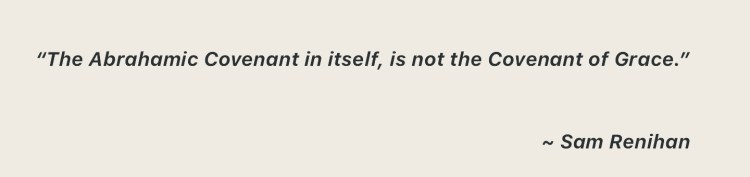
In a world where everyone has their own podcast, Theology Driven has proven to be one of the “good guys” when it comes to their promotion of sound doctrine. Dr. Sam Renihan joins the podcast this week to discuss Reformed/Particular Baptist Covenant Theology, and what sets it apart from the other “flavors” of the Reformed Covenant Theology tradition. 

Check out the complete podcast below…


https://theologydriven.podbean.com/mf/play/xsfp7v/Episode_28.mp3