Who You Calling Baptist?

17748D49-EE3D-4DED-B34D-B772D8C9478D


“When the terms ‘Particular’ and ‘General Baptist’ are imposed onto mid-seventeenth-century baptistic separatists, the impression is conveyed, whether intentionally or not, that arguments over soteriology were actively dividing what would have otherwise been a natural union of likeminded Baptists. The ubiquitous application of the ‘General’ and ‘Particular’ labels quite naturally conveys the impression that a ‘section of the Baptists had…broken with Calvinism and embraced Arminianism, as early as the second decade of the seventeenth century.’ Such formulations begin with an imagined community of ‘Baptists’ and then divide it along soteriological lines, implying a unified whole that has been fractured by soteriological disagreement, rather than two wholly disparate groups which happened to reach similar conclusions regarding baptism. One account of Particular Baptists explains that they would sometimes draw the boundaries of communion so narrowly ‘as to exclude the possibility of fellowship even with General Baptists on account of their doctrine of Free Will.’ The use of the intensifier ‘even’ implies that any lack of warm interaction between Particular and General Baptists represented a surprising disruption to an otherwise friendly coalition of self-identified ‘Baptists.’ Elsewhere, one reads that General Baptists were ‘[l]argely isolated by doctrinal differences from the radical Calvinist coalition’ within the ‘Baptist’ movement. 

To speak this way is to suggest, at least implicitly, that debate over Arminianism and Calvinism had disrupted a putative pan-Baptist communion. But the evidence does not support such a reading, and this tendency toward Baptist conflation distorts our understanding of all baptistic groups and the period’s wider religious culture.”
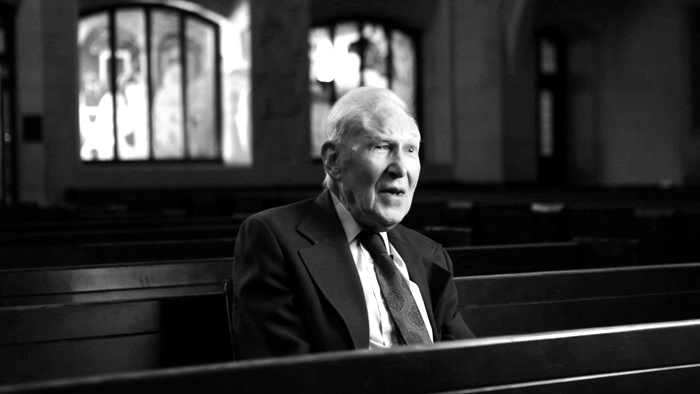
Joel Beeke on Preaching Reformed Truth…


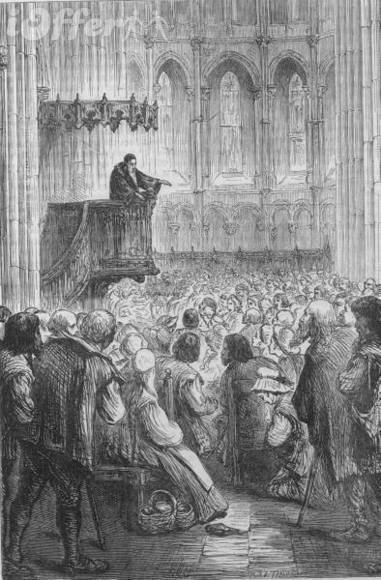
“The Reformed Christian faith is a wealth of wisdom. It is impossible to cram the richness of Reformed doctrine into a five-point outline, however helpful outlines may be for introducing basic ideas. Merely surveying the headings of the Westminster Confession of Faith (1647) reveals the confluence of many streams of truth: Holy Scripture, God and the holy Trinity, God’s eternal decree, creation, providence, the fall of man into sin, God’s covenant with man, Christ the Mediator, free will, effectual calling, justification, adoption, sanctification, saving faith, repentance unto life, good works, the perseverance of the saints, assurance of grace and salvation, the law of God, Christian liberty and liberty of conscience, religious worship and the sabbath day, lawful oaths and vows, the civil magistrate, marriage and divorce, the church, the communion of saints, the sacraments of baptism and the Lord’s Supper, church censures, synods and councils, the state of men after death, the resurrection of the dead, and the last judgment.

When you add the rich expositions of living for God (the Ten Commandments) and depending on God (the Lord’s Prayer) found in the Reformed catechisms, it’s clear that Reformed truth encompasses ‘all the counsel of God’ that the faithful preacher must declare (Acts 20:27).”

~ Joel Beeke, Reformed Preaching

Packer on Calvinism & Arminianism…

“The difference between them is not primarily one of emphasis, but of content. One proclaims a God who saves; the other speaks of a God who enables man to save himself. One view [Calvinism] presents the three great acts of the Holy Trinity for the recovering of lost mankind—election by the Father, redemption by the Son, calling by the Spirit—as directed towards the same persons, and as securing their salvation infallibly. The other view [Arminianism] gives each act a different reference (the objects of redemption being all mankind, of calling, those who hear the gospel, and of election, those hearers who respond), and denies that any man’s salvation is secured by any of them. The two theologies thus conceive the plan of salvation in quite different terms. One makes salvation depend on the work of God, the other on a work of man; one regards faith as part of God’s gift of salvation, the other as man’s own contribution to salvation; one gives all the glory of saving believers to God, the other divides the praise between God, Who, so to speak, built the machinery of salvation, and man, who by believing operated it. Plainly, these differences are important, and the permanent value of the ‘five points,’ as a summary of Calvinism, is that they make clear the points at which, and the extent to which, these two conceptions are at variance.”

~ J.I. Packer

Humility Arises Directly From Seeing the Lord…

“Again, it is certain that man never achieves a clear knowledge of himself unless he has first looked upon God’s face and then descends from contemplating Him to scrutinize himself. For we always seem to ourselves righteous and upright and wise and holy–this pride is innate in all of us–unless by clear proofs we stand convinced of our own unrighteousness, foulness, folly and impurity. Moreover, we are not thus convinced if we look merely to ourselves and not also to the Lord, who is the sole standard by which this judgement must be measured.”

~ John Calvin

Abraham, 1689 Federalism, and Covenant Membership…

For the Particular Baptists, all of the Old Testament saints were concurrently members of both the Old and the New Covenant.

As members of the Covenant of Circumcision, Old Testament Saints (like Abraham) were heirs to the physical land promises that God gave to Abraham, Isaac, and Jacob. As members of the New Covenant, these Old Testament saints were saved by none other than the life, death, resurrection, imputed righteousness, and finished works of Jesus Christ. Those who looked past the types and shadows of the Old Covenant to the antitype of those things that is Christ, were saved by His blood shed for the sins of His people at the cross.

The 1689 London Baptist Confession of Faith explains this with clarity…

This covenant is revealed in the gospel. It was revealed first of all to Adam in the promise of salvation through the seed of the woman. After that, it was revealed step by step until the full revelation of it was completed in the New Testament. This covenant is based on the eternal covenant transaction between the Father and the Son concerning the redemption of the elect. Only through the grace of this covenant have those saved from among the descendants of fallen Adam obtained life and blessed immortality. Humanity is now utterly incapable of being accepted by God on the same terms on which Adam was accepted in his state of innocence.

~ 1689 LBC 7.3

This is an important distinction that continues today between the Particular Baptists and their paedobaptist brethren, especially concerning the Presbyterian/Republication types. But it also is an important distinction between those who subscribe to what is known as 1689 Federalism, and those who have a more modern view of baptist covenant theology.

For the Particular Baptists, only the New Covenant is the Covenant of Grace. Those who disagree with that can still subscribe to the 1689 London Baptist Confession of Faith, for these nuanced but important differences between us are allowed within the Confession itself.

Knowing these differences can help Particular Baptists moving forward within their own tradition, as well as provide clarity for our Presbyterian and Republication brethren who wish to “engage” with our tradition. In other words, it will allow them to know what they’re arguing against. It also will prevent the “I used to be like you” argument, that usually results in a realization two hours of Twitter engagement later that you never were really like me in the first place.

You can find more information concerning the 1689 Federalism position at 1689federalism.com, and learn more about the unity & diversity of the Reformed tradition, the roots of the Particular Baptists who came from within that unity & diversity, as well as their view of Gods covenants here, and here.

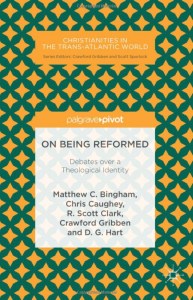
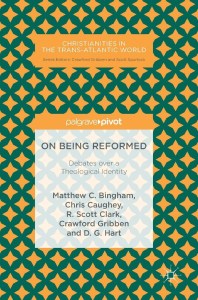
“On Being Reformed”

“We would rather be considered not Reformed and insist that men ought not to kill heretics, than that we are left with the Reformed name as the prize for assisting in the shedding of the blood of heretics.”

~ Abraham Kuyper

“If the Reformed confessions are the normative interpretation of the Scriptures, it would seem that Kuyper’s statements about Belgic 36 would require us to excommunicate him as having departed from the Reformation for the Radical Reformation. However, if the Particular Baptist’s were on the right track by paring the chapter on civil magistrate down to essentially Romans 13–and if men like Abraham Kuyper, Meredith Kline, and David VanDrunen can be allowed to make exegetical, theological, and historical arguments that distinguish between cult and culture much more than did the early modern Reformed–then perhaps it is time to be honest about who the Reformed were, what the Reformed believed, and to recognize that we have only partially shared their legacy, while being modest and charitable about our own confessions and our own confessional identities. And, perhaps, it is time to admit that we–wherever we are on the spectrum between ‘new Calvinists’ and the ‘confessionally Reformed’–may have more in common with the Particular Baptists of the seventeenth century than the architects of Reformed identity in the century before them.”

~ C. Caughey & C. Gribben, On Being Reformed 

A Quick Observation Concerning the Covenant of Circumcision…

“9 As for you, you shall keep my covenant, you and your offspring after you throughout their generations.

10 This is my covenant, which you shall keep, between me and you and your offspring after you: Every male among you shall be circumcised.

11 You shall be circumcised in the flesh of your foreskins, and it shall be a sign of the covenant between me and you.

12 He who is eight days old among you shall be circumcised. Every male throughout your generations, whether born in your house or bought with your money from any foreigner who is not of your offspring,

13 both he who is born in your house and he who is bought with your money, shall surely be circumcised. So shall my covenant be in your flesh an everlasting covenant.

14 Any uncircumcised male who is not circumcised in the flesh of his foreskin shall be cut off from his people; he has broken my covenant.”

~ Genesis 17:9-14

In the book of Exodus, God commands Moses to go to Egypt to demand that Pharaoh release the Israelites from slavery. Something interesting happens on the way…


24 At a lodging place on the way the Lord met him and sought to put him to death.
25 Then Zipporah took a flint and cut off her son’s foreskin and touched Moses’ feet with it and said, “Surely you are a bridegroom of blood to me!”

26 So he let him alone. It was then that she said, “A bridegroom of blood,” because of the circumcision.

~ Exodus 4:24-26


🤔

Concerning the “New Calvinist” and “Truly Reformed”


“As we have argued, this attempt to recover ‘the Reformed confession’ stumbles over the fact that few of those who believe themselves to be it’s modern-day adherents would be prepared to sign the first editions of any of its theological symbols. Neither the ‘new Calvinists’ nor the ‘truly Reformed’ who interrogate them could adopt without qualification any of the sixteenth- or seventeenth-century ‘Reformed’ confessions. Guido de Bres, the author of the Belgic Confession, could not understand either party as subscribing to his statement of faith, and so would deny both parties the identity of ‘Reformed,’ and would hardly be happy with either party pretending otherwise. Had he the benefit of anticipating seventeenth-century theological development, he might also point to an irony of the ‘truly Reformed’ position–that being ‘truly Reformed’ is much closer to the historic Particular Baptist confessional position (1677/1689) than those who claim this label might be prepared to admit. Many of those ‘confessionalist’ who are pushing back on the ‘new Calvinist’ claims to Reformed identity advocate a number of key theological ideas that do not exist in the sixteenth- or seventeenth-century confessions they praise. These clarifications–sharpening the doctines of imputation and justification, the covenant of redemption, as well as the non-sacral role of civil government–are not present in the Westminster Confession, but come together as a package for the first time in the Second London Baptist confession of faith (1677/1689). Nevertheless, while, according to ‘truly Reformed’ advocates, these ideas are part of the recovery of the ‘Reformed confession,’ the statement of faith in which they were first packaged is not. The Baptist confession might be a more reliable guide to the faith of the ‘truly Reformed’ than the first edition of the Westmister Confession of Faith.

Therefore, while the Westminster standards and the Three Forms of Unity summarize the interpretation of Scripture of the first several generations of Reformed Protestants, they no longer accurately summarize what most contemporary Reformed and Presbyterians believe the Bible teaches.”

~ Chris Caughey and Crawford Gribben, On Being Reformed

John Stott on Proclamation and Appeal…


D7F73562-F2CF-4659-A64C-957D121E3133

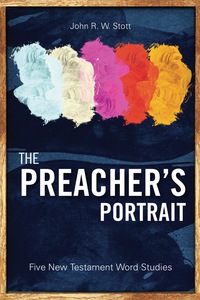
“The second lesson we must learn from this Biblical coupling together of proclamation and appeal is the complementary one: we must never make the proclamation without then issuing an appeal. If one had to choose between the two, I would rather have the proclamation than the appeal, but fortunately we are not faced with this choice. We are to find room for both proclamation and appeal in our preaching if we would be true heralds of the King. I am not presuming to say what form this appeal should take. Nor am I advocating any particular evangelistic technique or method. I am simply saying that proclamation without appeal is not Biblical preaching. It is not enough to teach the gospel, we must urge men to embrace it.

Naturally, there are many factors which inhibit preachers from making this appeal. There is a kind of hyper-Calvinism, which regards the call to repentance and faith as an attempt to usurp the prerogatives of the Holy Spirit. Of course we agree that man is blind, dead and bound; that repentance and faith are the gifts of God; and that men are unable to turn from their sins to Christ without the prevenient grace of the Holy Spirit. The apostle Paul taught these truths. But this should not stop us from beseeching men to be reconciled to God, for the apostle Paul did this also! Other preachers have a great horror of emotionalism. So have I, if this means the artificial stirring of the emotions by rhetorical tricks or other devices. But we should not fear genuine emotion. If we can preach Christ crucified and remain altogether unmoved, we must have a hard heart indeed. More to be feared than emotion is cold professionalism, the dry, detached utterance of a lecture which has neither heart nor soul in it. Do man’s peril and Christ’s salvation mean so little to us that we feel no warmth rise within us as we think about them?”

~ John Stott, The Preacher’s Portrait 

Concerning Regeneration…

7D1FA42C-B4FD-4A05-A37E-8914E6FCEA9F


Alistair Begg is the pastor of Parkside Church in Cleveland, Ohio. Here he provides an encouraging perspective on the doctrine of regeneration. 

What is the work of the Spirit of God? 

It is to accomplish what cannot be accomplished in any other way, by any other root. 

The Bible is so clear on this, if you read Ephesians 2 he says, “When you were dead in your trespasses and in your sins you were made alive in Christ.”

How can dead people come to life? It will take a miracle! 

You see, this is the Gospel. The Gospel is not a word of encouragement to those who are sort of well meaning people who would like to add a little religion.

It is not a word of encouragement to those who would like to have a little Jesus in their life. 

No, the word of the Gospel is the word that comes to the rebel heart.

“I am a rebel against God! I may be indifferent to him, I may be antagonistic to him, but I’m actually rebelling against him!”

He then comes by the Bible and says, “I’m commanding you to do an about turn, to repent of your sins, and to believe in me.”

And the individual says, “There is no way that that is going to happen! It will take a miracle for that to happen!” 

Yes it will! 

And that is the miracle of regeneration…