Spurgeon on Election…

“But we ought always to give thanks to God for you, brothers beloved by the Lord, because God chose you as the firstfruits to be saved, through sanctification by the Spirit and belief in the truth. To this he called you through our gospel, so that you may obtain the glory of our Lord Jesus Christ.” ~ 2 Thessalonians 2:13–14 (ESV)

“If there were no other text in the sacred word except this one, I think we should all be bound to receive and acknowledge the truthfulness of the great and glorious doctrine of Gods ancient choice of his family. But there seems to be an inveterate prejudice in the human mind against this doctrine, and although most other doctrines will be received by professing Christians, some with caution, others with pleasure, yet this one seems to be most frequently disregarded and discarded. In many of our pulpits, it would be reckoned a high sin and treason to preach a sermon upon election, because they could not make it what they call a ‘practical’ discourse. I believe they have erred from the truth therein. Whatever God has revealed, he has revealed for a purpose. There is nothing in Scripture which may not, under the influence of God’s Spirit, be turned into a practical discourse: for ‘all Scripture is given by inspiration of God, and is profitable’ for some purpose of spiritual usefulness. It is true, it may not be turned into a free-will discourse—that we know right well—but it can be turned into a practical free-grace discourse ; and free-grace practice is the best practice, when the true doctrines of God’s immutable love are brought to bear upon the hearts of saint and sinners.“

~ Charles Spurgeon

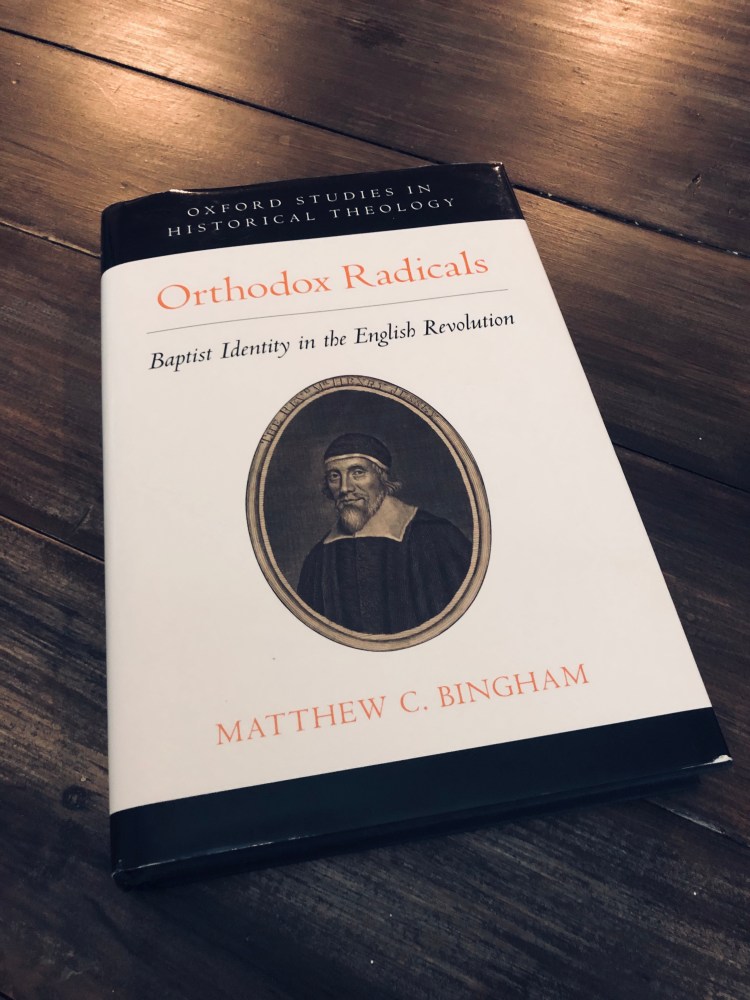
“Baptists Along the Congregational Way”

“On June 29, 1645, Henry Jessey was baptized. The man who baptized him was Hanserd Knollys, a fellow London independent who would soon take a prominent position among baptistic congregationalists in London. By this time, many in the city had rejected the baptism they had received in infancy and the confession of the seven London churches “commonly (though falsly) called Anabaptists” had been in print for over half-a-year. But the baptism of Henry Jessey was of special importance in that it signaled a major ideological shift in the life of London’s longest standing and most influential independent congregation.

Two years earlier, Knollys, then a member of Jessey’s church, balked at presenting his own child for baptism. His refusal apparently resonated widely within the congregation because Knollys’s doubts about the practice occasioned a church-wide “conference” in which the question of infant baptism “was discussed in all Love for many weeks togeather.” Focusing on the interpretation of God’s dealings with Abraham in Genesis 17, the debate questioned whether or not this passage implied a place for the children of Christian parents within God’s covenant people. One noteworthy participant answering in the negative was William Kiffen (1616-1701), a London merchant whose name would appear atop the list of signatures on the 1644 London confession later that year. As discussion progressed, more and more of Jessey’s church members sided with Knollys, some having “such impressions on their Spirits against Pedobaptisme, as they told ye Elder [i.e. Jessey] upon his enquiry, that he could not but judg there was much of God in it, yet still he then remained in his judgment for it [i.e. paedobaptism].”

By March 1644, the debate had become serious enough as to warrant outside intervention. The church sought “ye Advice of ye Elders & Brethren of other Churches” and brought in a collection of counsellors that included Praisegod Barbon (c. 1598-1679), Thomas Goodwin (1600-1680), Phillip Nye (bap. 1595; d.1672), Sidrach Simpson (c. 1600~1655), and Jeremiah Burroughes (bap. 1601?, d. 1646). This group of leading independent ministers, although not baptistic themselves, nevertheless urged restraint and a conservative, sympathetic approach to the growing number of anti-paedobaptists among Jessey’s flock: “these. . . advised us. .. not to Excom[m]unicate, no, nor admonish,” but instead “[t]o count them still of our Church; & pray, & love them.” For just over a year, the church took this course, until, eventually, the momentum unleashed by Knollys’s scruple overpowered Jessey himself and he “was convinced also” that infant baptism was not proper Christian practice. Jessey soon was baptized by Mr Knollys, and then by degrees he Baptized many of ye Church.”

These events and the personalities involved in them raise questions about the history and self-identity of mid-seventeenth-century: “Baptists”—questions that have too often been obscured by an historiographical agenda set by denominational partisans for whom past and present were inextricably and deleteriously interwoven. The present chapter will excavate afresh the mass of social and religious entanglements between “Baptists” and congregationalists that made possible the theological conferences just described. In doing so, we will reassess the relationship between these groups and come to recognize that the realities of mid-seventeenth century religious identity were never as straightforward as they have often appeared in retrospect.”

A Providential God…

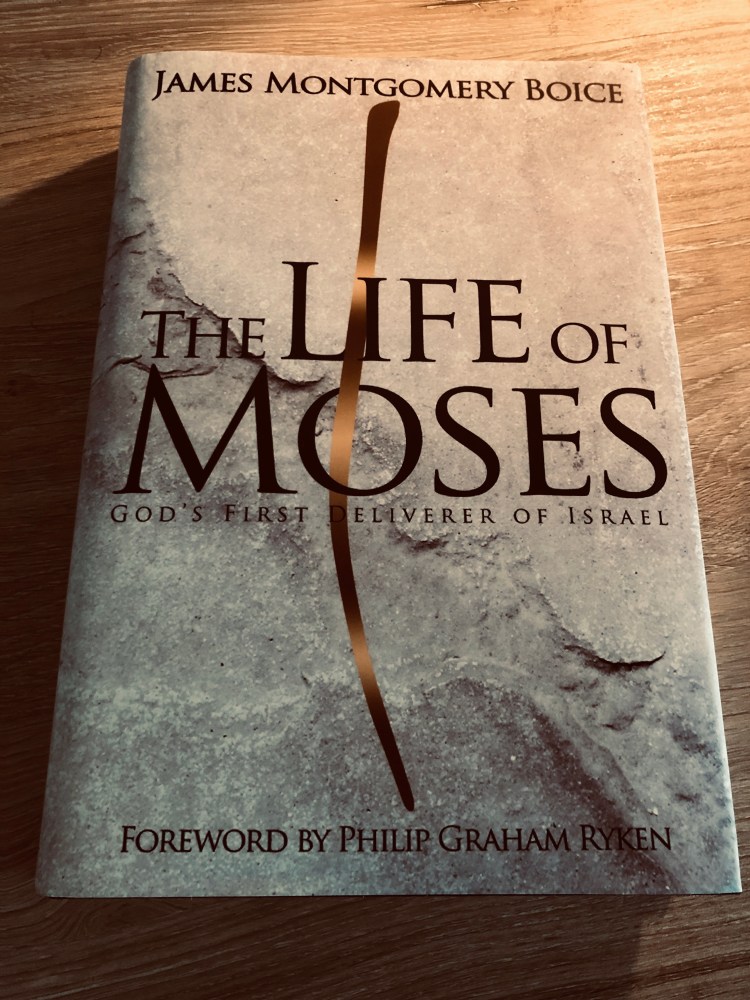
“Many miracles take place in Moses’ story as God works through him to deliver the people. In fact, more miracles are associated with Moses and his lifetime than with any other biblical figure except Jesus. But it is striking that no miracles take place at the beginning of the story. An unbeliever would call these events coincidence, We say providence.

Notice what happened. The providence of God ordered the steps of Pharaoh’s daughter as she came to the Nile to bathe. The providence of God allowed the baby to cry at just the right time. The providence of God moved the heart of the princess to want to save the baby. Finally, the providence of God arranged for the baby to be raised by his own mother, even though the princess did not suspect it. The point, is that God was at work here as much as he was later in Moses’ life. God is at work in the circumstances of your life as well. You may protest that you haven’t seen any miracles in your life. There is no reason why you should. God is the God of providence, not just the God of miracles, and that means that he has been operating in all the details in all the circumstances of your life. Shouldn’t you recognize this if you believe in a providential God? Shouldn’t you thank him for it?”

Robert Haldane: Romans

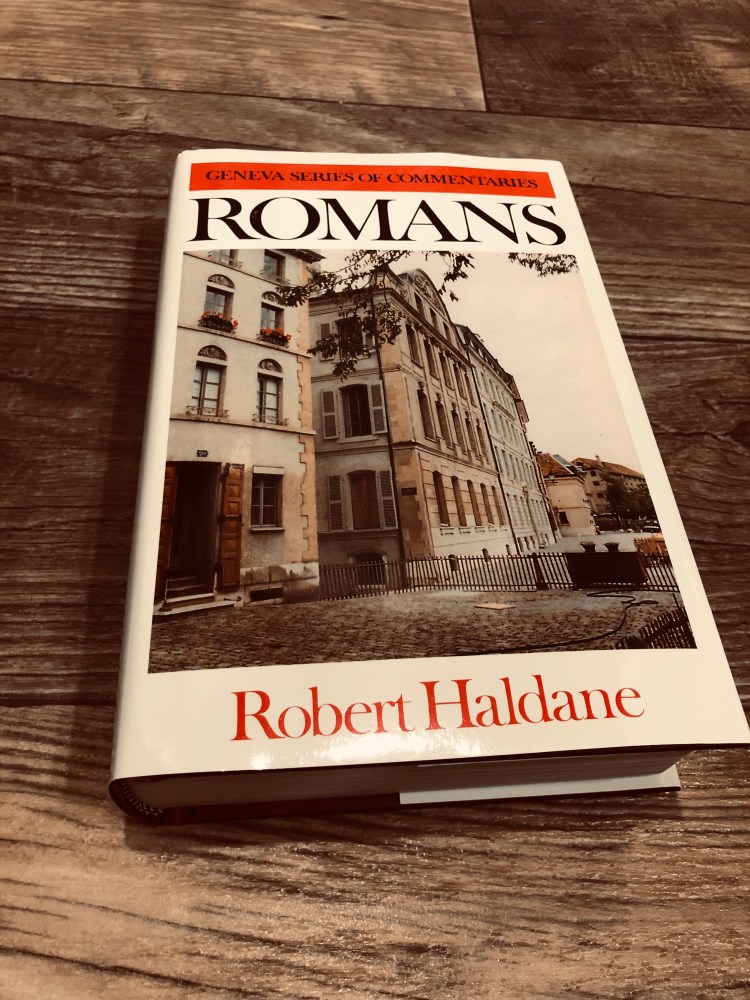
“On 6 February, 1817, Robert Haldane ‘undertook to read and explain’ the Epistle to the Romans to more than twenty students from the school of theology in Geneva. In the hotel room of this visitor at 19 Place Maurice, on the promenade of St. Antoine, the teaching of this Epistle to students who had previously known nothing but ‘the chilling influence’ of Unitarianism led to ‘a striking revival’ and to ‘the second Reformation in Geneva’. Prior to this date Jean Jacques Rousseau wrote: ‘It is asked of the ministers of the Church of Geneva, if Jesus Christ be God? They dare not answer.’ Through Haldane’s exposition many of the young men were profoundly changed and prepared to give an answer that was heard across Europe. One of them was Merle d’Aubigné, whose life was largely given to the recovery of the true history of the Reformation. Another was M. Charles Rieu who after only a few years of parish ministry died in ‘unutterable peace and joy’. Among the last words recorded in Kieu’s journal were, ‘Resurrection and life – Eternity – Eternity with Jesus?

Haldane’s Exposition of Romans was first printed in English in 1835-39 and, In print today, its message Is still able to change cities and nations. ‘That portion of the Word’, says his biographer, ‘had taught him the sovereignty of God, the corruption of man, and the perfection of that righteousness Which is provided and appointed for the salvation of believers.’”

Calvin on Hebrews 6:4…

“But here arises a new question, How can it be that he who has once made such a progress should afterwards fall away? For God, it may be said, calls none effectually but the elect, and Paul testifies that they are really his sons who are led by his Spirit, (Rom. 8:14;) and he teaches us, that it is a sure pledge of adoption when Christ makes us partakers of his Spirit. The elect are also beyond the danger of finally falling away; for the Father who gave them to be preserved by Christ his Son is greater than all, and Christ promises to watch over them all so that none may perish. To all this I answer, That God indeed favours none but the elect alone with the Spirit of regeneration, and that by this they are distinguished from the reprobate; for they are renewed after his image and receive the earnest of the Spirit in hope of the future inheritance, and by the same Spirit the Gospel is sealed in their hearts. But I cannot admit that all this is any reason why he should not grant the reprobate also some taste of his grace, why he should not irradiate their minds with some sparks of his light, why he should not give them some perception of his goodness, and in some sort engrave his word on their hearts. Otherwise where would be the temporary faith mentioned by Mark 4:17? There is therefore some knowledge even in the reprobate, which afterwards vanishes away, either because it did not strike roots sufficiently deep, or because it withers, being choked up.”

Robert W. Godfrey on the Synod of Dort…

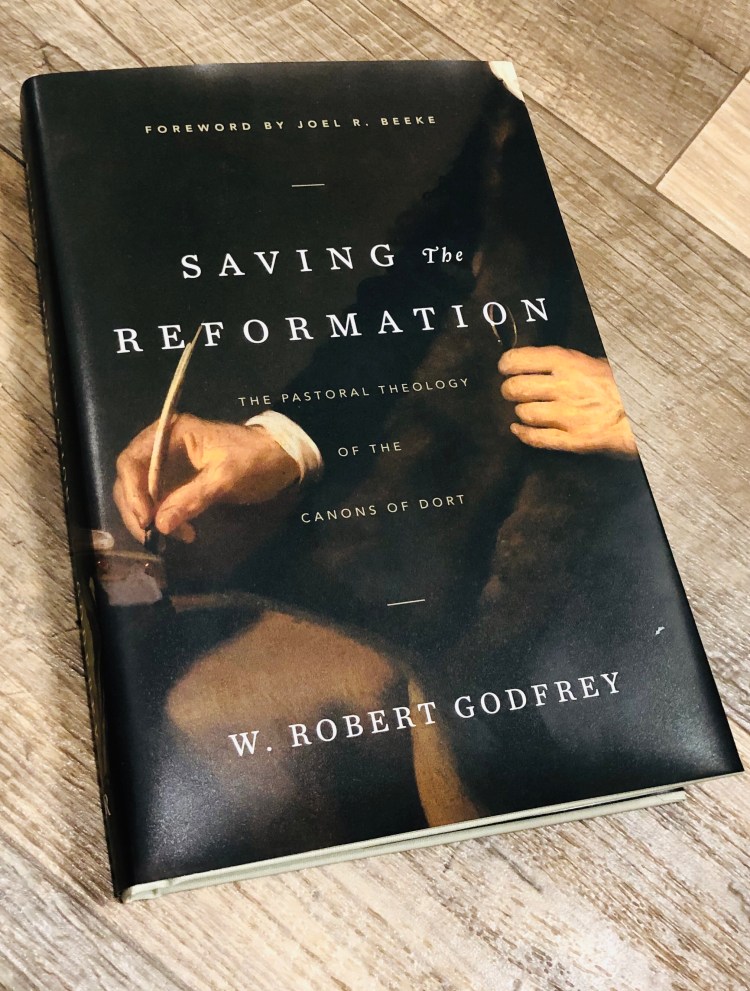
“In a profound sense, this synod saved the Reformation for the Reformed churches. While Lutherans would reject several elements of the canons, Calvinists saw clearly that a proper understanding of election was necessary to protect the Reformation’s ‘grace alone.’ The proper understanding of Christ’s atoning work was necessary to protect the Reformation’s ‘Christ alone.’

A proper understanding of the regenerating and preserving work of the Holy Spirit and of the Christian’s comfort in these doctrines was necessary to protect the Reformation”s ‘grace alone’ and ‘faith alone.’ Implicit in the canons’ conclusions is their commitment to the Reformation’s ‘Scripture alone’ as the only source of religious truth.As the Reformation was a revival of a biblical Augustinianism, so the Synod of Dort stands in the great Christian heritage that rejects Pelagianism and semi-Pelagianism. It stands in the tradition of Jesus against the Pharisees, Paul against the Judaizers, Athanasius against Arius, Augustine against Pelagius, and Luther against Erasmus. Dort against the Arminians continues that great commitment. The canons became the official teaching and sincere conviction of many churches and millions of Christians through the last four centuries.”

~ Robert Godfrey, Saving The Reformation

J.I. Packer on Arminianism vs Calvinism…


DA17557E-ECD7-4057-A243-12D224183B42

“Where the Arminian will only say, ‘I could not have gained my whole salvation without Calvary’, the Calvinist will say, ‘Christ gained my salvation for me at Calvary.'”

“Where the Arminian says, ‘I owe my election to my faith’, the Calvinist says, ‘I owe my faith to my election.’ Clearly, these two concepts of election are very far apart.”

“However this may be (and we shall say more about it later), the result of these omissions is that part of the biblical gospel is now preached as if it were the whole of that gospel; and a half-truth masquerading as a whole truth becomes a complete untruth. Thus, we appeal to men as if they had the ability to receive Christ at any time; we speak of his redeeming work as if he had to make it possible for us to save ourselves by believing; we speak of God’s love as if it were no more than a general willingness to receive any who will turn and trust; and we depict the Father and the Son, not as sovereignly active in drawing sinners to themselves, but as waiting in quiet impotence ‘at the door of our hearts’ for us to let them in.”

Calvin on the Need for Scripture…

8BC2412B-6912-490C-BB49-D8B061E59F9C


“Therefore, though the effulgence which is presented to every eye, both in the heavens and on the earth, leaves the ingratitude of man without excuse, since God, in order to bring the whole human race under the same condemnation, holds forth to all, without excepion, a mirror of his Deity in his works, another and better help must given to guide us properly to God as a Creator. Not in vain, therefore, has he added the light of his Word in order that he might make himself known unto salvation, and bestowed the privilege on those whom he was pleased to bring into nearer and more familiar relation to himself. For, seeing how the minds of men were carried to and fro, and found no certain resting-place, he chose the Jews for a peculiar people, and then hedged them in that they might not, like others, go astray. And not in vain does he, by the same means, retain us in his knowledge, since but for this, even those who, in comparison of others, seem to stand strong, would quickly fall away. For as the aged, or those whose sight is defective, when any book, however fair, is set before them, though they perceive that there is something written, are scarcely able to make out two consecutive words, but, when aided by glasses, begin to read distinctly, so Scripture, gathering together the impressions of Deity, which, till then, lay confused in their minds, dissipates the darkness, and shows us the true God clearly. God therefore bestows a gift of singular value, when, for the instruction of the Church, he employs not dumb teachers merely, but opens his own sacred mouth; when he not only proclaims that some God must be worshipped, but at the same time declares that He is the God to whom worship is due; when he not only teaches his elect to have respect to God, but manifests himself as the God to whom this respect should be paid.”

~ John Calvin, The Institutes of Christian Religion I.VI.1

Berkhof on the Inspiration of Scripture…


img_0274

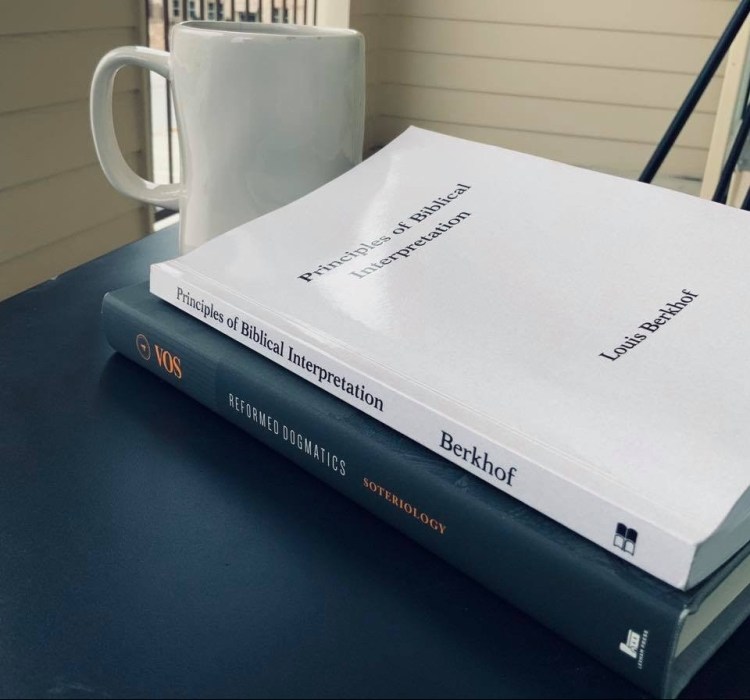
“The Bible is, in all it’s parts, both in substance and form, down to the least minutiae, a book that comes from God. At the same time, it was composed, from the beginning to end, through the instrumentality of man, and bears all the marks of human authorship that are consistent with infallibility. We cannot fully understand the process of inspiration, though certain analogies may help us to realize its possibility. It is a mystery that defies explanation, and must be accepted by faith.”

Louis Berkhof