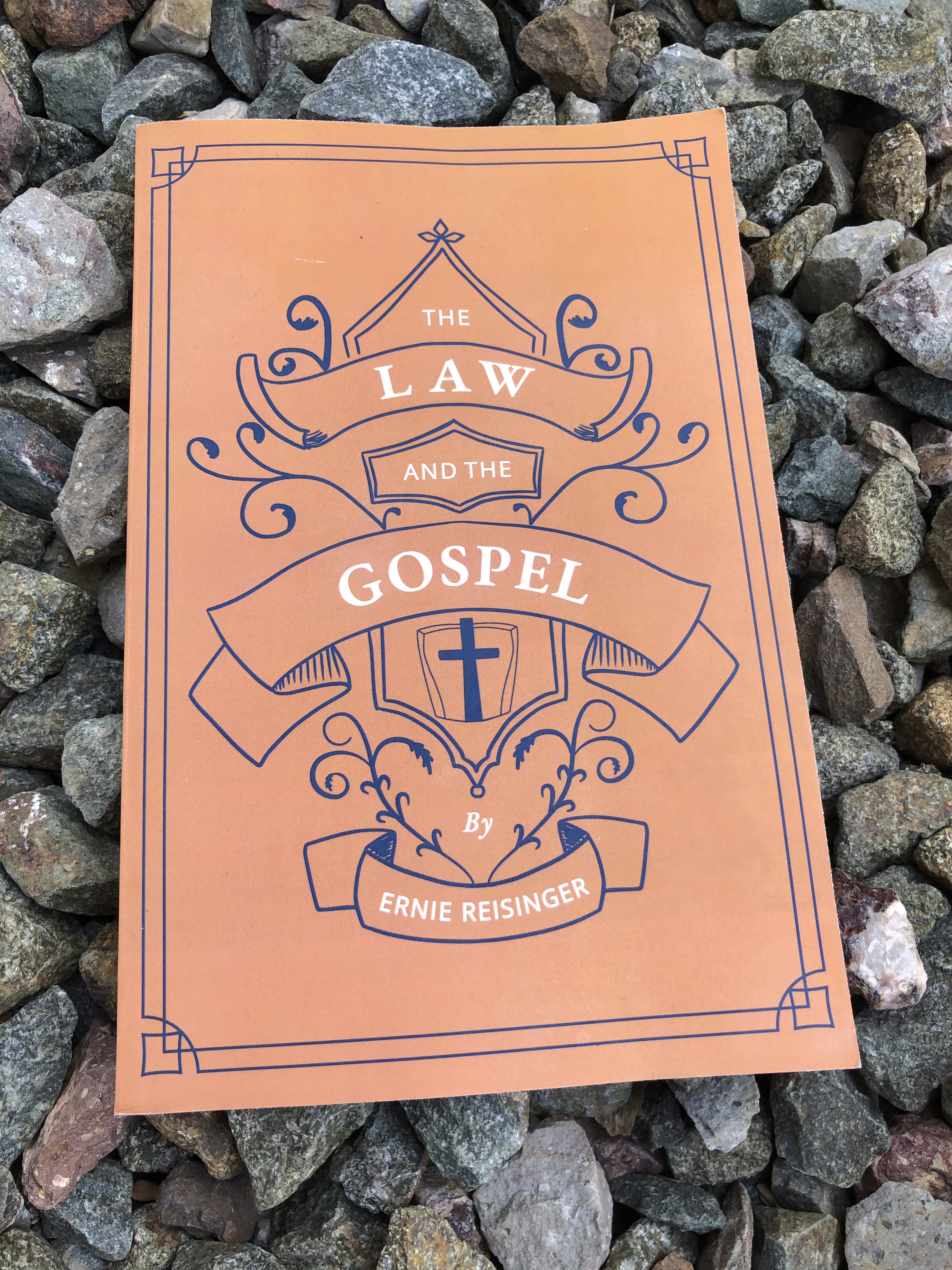
“And therefore although the Covenant and Promises were made to Abraham, and his seed, yet the consequences will not follow, that the Covenant is likewise made with all believers and their seed, for believers only are the seed, and the seed only, and none of them the father in the Gospel sense, nor any other, save only Abraham to whom and his seed the Covenant and Promises are made.”
~ Andrew Ritor, The Second Part of the Vanity & Childishness of Infant Baptism (London:1642).
“Concerning God, and those that are of him, and in him, neither is the mind of man able to conceive what they be, how great they be, and of what fashion they be: neither doth the eloquence of man’s mouth utter in speech words in any point answerable unto his majesty. For to the thinking upon, and uttering out of his majesty, all eloquence is mute and dumb, and the whole mind is too, too little. For it is greater than the mind: neither can it be conceived how great it is: because if it can be conceived, then must it needs be less than man’s mind, wherein it may be comprehended. It is also greater than all speech, and cannot be spoken. Because if it may be spoken, then is it lesser than man’s speech, by which, if it be spoken, it may be compassed and made to be understood. But what sooner may be thought of him shall be less than he and whatsoever in speech is showed of him, being compared with him shall be much less than he. For in silence to ourselves we may partly perceive him: but as he is, in words to express him, it is altogether impossible. For if you call him light, then do you rather name a creature of his, than him, but him you express not. Or if you call him virtue, then do you rather name his power than him, but him you declare not. Or if you call him Majesty, then do you rather name his honor than him, but him you describe not. And why should I, in running through every several title, prolong the time? I will at once declare it all. Say all of him whatsoever thou canst, and yet thou shalt still rather name some thing of his, than himself. For what canst thou fitly speak or think of him, that is greater than all thy words and senses? Unless it be, that after one manner, and that too as we can, as our capacity will serve, and as our understanding will let us, we shall in mind conceive what God is, if we shall think that he is that, which cannot be understood, nor can possibly come into our thought, what kind of thing, and how great it is… What can you fitly think of him, that is above all loftiness, higher than all height, deeper than all depth, lighter than all light, clearer than all clearness, brighter than all brightness, stronger than all strength, more Virtuous than all virtue, fairer than all fairness, truer than all truth, greater than all greatness, mightier than all might, richer than all riches, wiser than all wisdom, more liberal than all liberality, better than all goodness, justice that all justice, and gentler than all gentleness. For all kinds of virtues must needs be less than he, that is the Father and God of all virtues: so that God may truly be said to be such a certain Being, as to which nothing may be compared. For he is above all that may be spoken.”
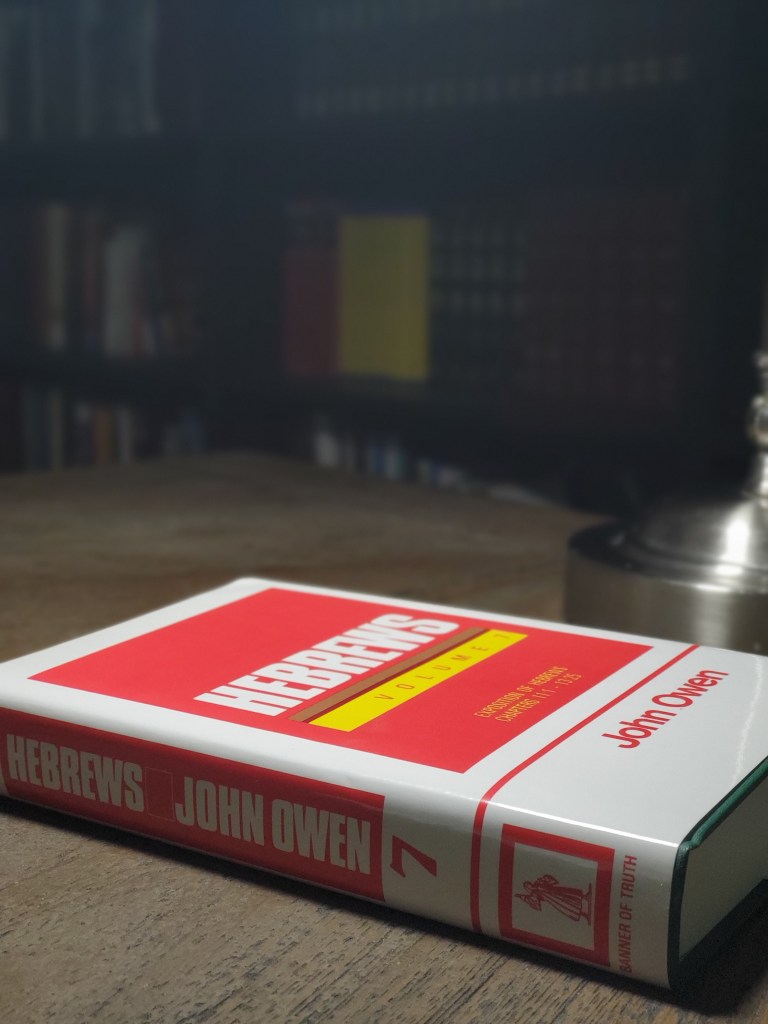
John Owen was not a Baptist. Our argument is that he sure sounded like one on many occasions (see below). To understand why the confessional Baptists of the 17th century, as well as confessional Baptists of today appeal to Owen see here…
The judgement of most reformed divines is, that the church under the Old Testament had the same promise of Christ, the same interest in him by faith, remission of sins, reconciliation with God, justification and salvation by the same way and means, that believers have under the new… The Lutherans, on the other side, insist on two arguments to prove that there is not a twofold administration of the same covenant, but that there are substantially distinct covenants and that this is intended in this discourse of the apostle…
Having noted these things, we may consider that the scripture does plainly and expressly make mention of two testaments, or covenants, and distinguish between them in such a way as can hardly be accommodated by a twofold administration of the same covenant…Wherefore we must grant two distinct covenants, rather than merely a twofold administration of the same covenant, to be intended…
Having shown in what sense the covenant of grace is called “the new covenant,” in this distinction and opposition to the old covenant, so I shall propose several things which relate to the nature of the first covenant, which manifest it to have been a distinct covenant, and not a mere administration of the covenant of grace.
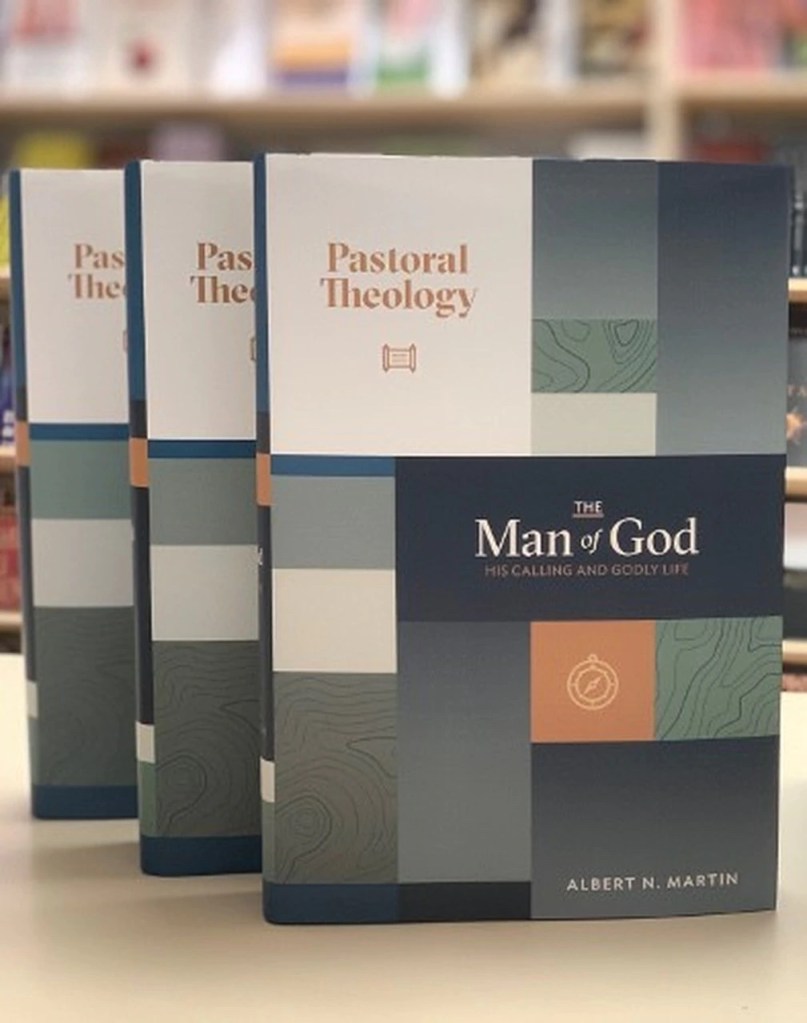
“This is a growing tendency to ‘deem it of prime importance that they should enter upon their ministry accomplished preachers, and of only secondary importance that they should be scholars, thinkers, theologians.’ ‘It is not so,’ he is reported as saying, ‘that great or even good preachers are formed. They form themselves before they form their style or peaching. Substance with them precedes appearance, instead of appearance being a substitute for substance. They learn to know the truth before they think of presenting it… They acquire a solid basis for the manifestation of their love of souls through a loving, comprehensive, absorbing study of the truth which saves souls.’ In these winged words is outlined the case for the indispensableness of Systematic Theology for the preacher. It is summed up in the propositions that it is through the truth that souls are saved, that is accordingly the prime business of the preacher to present this truth to men, and that is consequently his fundamental duty to become himself possessed of this truth, that he may present it to men and so save their souls. It would not be easy to overstate, of course, the importance to a preacher of those gifts and graces which qualify him to present this truth to men in a winning way—of all, in a word, that goes to make him an ‘accomplished preacher.’ But it is obviously even more important to him that he should have a clear apprehension and firm grasp of that truth which he is to commend to men by means of these gifts and graces.”
“Many in all ages have attempted thus to please God without faith, and yet continue to do so. Cain began it. His design in his offering was to please God; but he did not in faith, and failed in his design. And this is the great difference always in the visible church. All in their divine worship profess a desire to please God, and hope that so they shall do,—to what purpose else was it to serve him?—but, as our apostle speaks, many of them seek it not by faith, but by their own works and duties which they do and perform, Romans 9:32. Those alone attain their end who seek it by faith. And therefore God frequently rejects the greatest multiplication of duties, where faith is wanting…”
“Be careful, then, how you think. False premises produce false conclusions, even when one’s reasoning is logically sound. If you assume that the moral law had a beginning at Sinai, you might as well assume that the law had an end at Calvary. But we know that all sinned before Sinai, therefore breaking some commandment—some law—as Romans 4:15 and 5:13 indicate. Before the commandments were given in plain, written form ‘on tables of stone,’ the moral law must have been known in some other form. Otherwise the sins of lawbreakers could not have been punished.”
“If we deny Adams’s place as as federal head of a covenant that would either vindicate or condemn him according to his works, then we remove the possibility for mankind to fall in him. And if that is the case, we remove the reason for the incarnation of the eternally begotten Son of God. In fact, we remove the reason for God’s wrath towards mankind and man’s spiritual deadness in sins and trespasses, More than that, we remove the biblical framework within which to understand the category of imputation, so vital to Paul’s argument concerning Adam and Christ in Romans 5. If we fail to grasp this foundation, we will be building on sand from the start.”
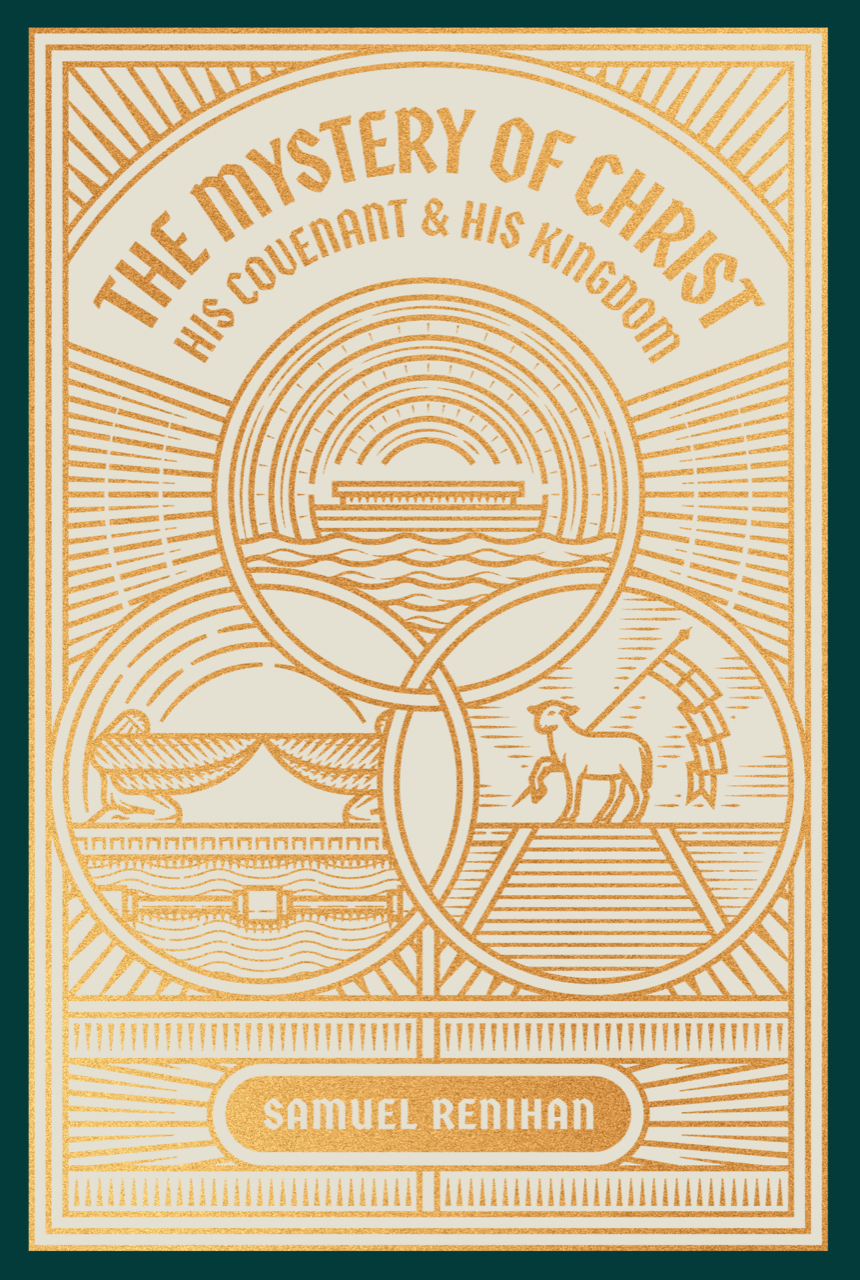
Too many times, systematic conclusions are included in covenant theologies without an actual necessity in the conclusion. For example, circumcision was given to Abraham as a seal (Romans 4:11). Putting aside for now the full meaning of this text in its context, some conclude that therefore all covenants have seals and apply the term to baptism, not as an illustration to explain baptism, but as a part of their theological system to be received and believed. Some have noted that blood is spilled in connection with a covenant and conclude therefore that apart from a blood-ritual there is no covenant. Some have noted that families are included in covenants and have concluded therefore that families are a necessary feature of all covenants.
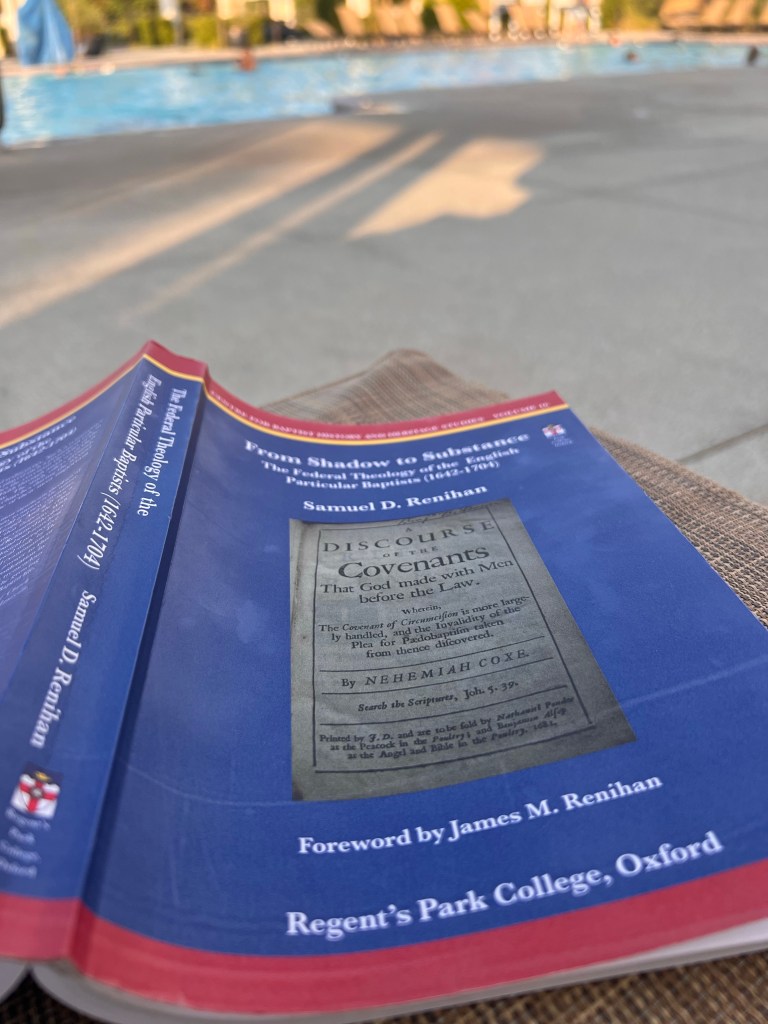
Each of these conclusions may be true. The point is simply that they are not necessarily true because the features of one covenant cannot be used to determine the features of another covenant. There is no natural necessity, inference, or proportion between things instituted, things positive, things supernatural, things covenantal. And systems built on inferences derived from covenants, which are neither natural nor necessary, will therefore contain unnecessary, and likely illegitimate, consequences. As Nehemiah Coxe said, because covenants are instituted by God and do not arise from any natural state,
“… our Knowledge and Understanding of them, must wholly depend upon Divine Revelation…seeing the nature of them is such as transcends common Principles of Reason or natural Light.”
This distinction between creation and covenant, with its methodological implications for consequences, does not deny the analogy of faith. The limitation of the details of one covenant to the institution of the covenant is not the same as the limitation of the details of one covenant to one passage of Scripture. The Word of God may speak of one covenant in many places, and they are all to be consulted and considered as constituting the final word on the matter.
“One way in which this balance has not been maintained in the past is by covenant theologies that equate the Abrahamic, Mosaic, and Davidic covenants with the new covenant, or covenant of grace, based on the continuity of salvation throughout them and their contribution to the progressive revelation of Christ and his mission. The problem is that in such a system, a progression of covenants becomes one covenant, and the system therefore controls, reduces, and flattens out the progressive nature of the biblical material from which it is derived. That which stays the same has wrongly reinterpreted that which changes.
In covenant theology, where covenants are not a part of the created order, the system of covenant theology is especially and necessarily dependent on, and determined by, the biblical data. And the covenant theologian, or student of covenant theology, must maintain the proper balance between the law and the gospel, substantially and historically. Salvation is indeed by grace alone through faith alone in Christ alone, as it has been ever since its announcement in Genesis 3:15. But the relation of each subsequent covenant to this promise must be considered individually, and any system raised from these details must account for the ongoing progress of history.”
“A cursory definition of typology as correspondence and escalation may give the impression that typology is simply a shift from one end of a scale to another. It paints types and antitypes as two ends of a spectrum. The type is dark, grey, and as we move up the scale or cross the spectrum, the type becomes colorful and vibrant until it reaches the point of being the antitype. However, that is not the full and true nature of typology as presented by the Scriptures. The Bible contrasts types and antitypes as two different things. Its language is that of shadows and substances, pictures and realities. The escalation of typology is not merely quantitative, but qualitative. Types are pictures of antitypes. Antitypes are other and greater than the types.”




 rruiz0369